Insights
Why hire an integrated architecture and engineering firm? The situation that leads to this question is more common than it seems. An owner hires an architect, then looks for a structural engineer at another firm, then yet another for the HVAC, utilities and electrical disciplines. By the time construction begins, there are three incompatible versions of the same project on the table, and the contractor is not sure which one to follow. This is not bad luck: it is the expected outcome when the design team was never conceived as a coherent system from the start.
Some firms work differently. CertiAmb brings together architects, engineers and technical consultants under a single coordination process, sharing information from the preliminary study through to the end of construction. That leaves three practical points open: what happens when architecture and engineering work separately, what concretely changes when they work as one, and what questions you should ask before signing any proposal.
Why hire an integrated architecture and engineering firm
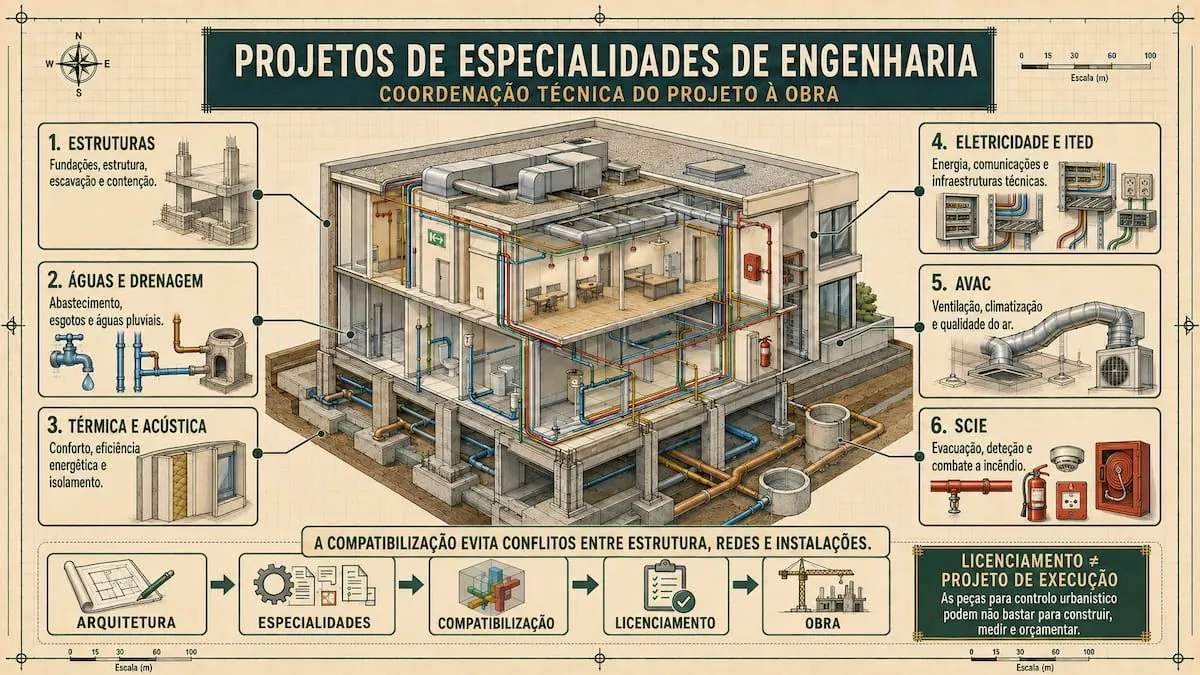
A design conflict has a very concrete shape: the structural beam runs exactly where the architect drew a window, the HVAC duct clashes with the slab, the drainage system was relocated by the architect after the disciplines engineer had already finalised their drawings. These problems are not the individual failing of any one professional. They are the natural consequence of teams that do not share information in real time and that work on different versions of the same project.
In projects with separate firms, cross-discipline coordination happens late, often already at the permitting stage or even on site. By that point, resolving a conflict costs far more than it would have cost if it had been caught at the preliminary study. The impact is not only financial: on site, the time lost correcting incompatibilities can easily represent weeks or months of delay in the developer's schedule.
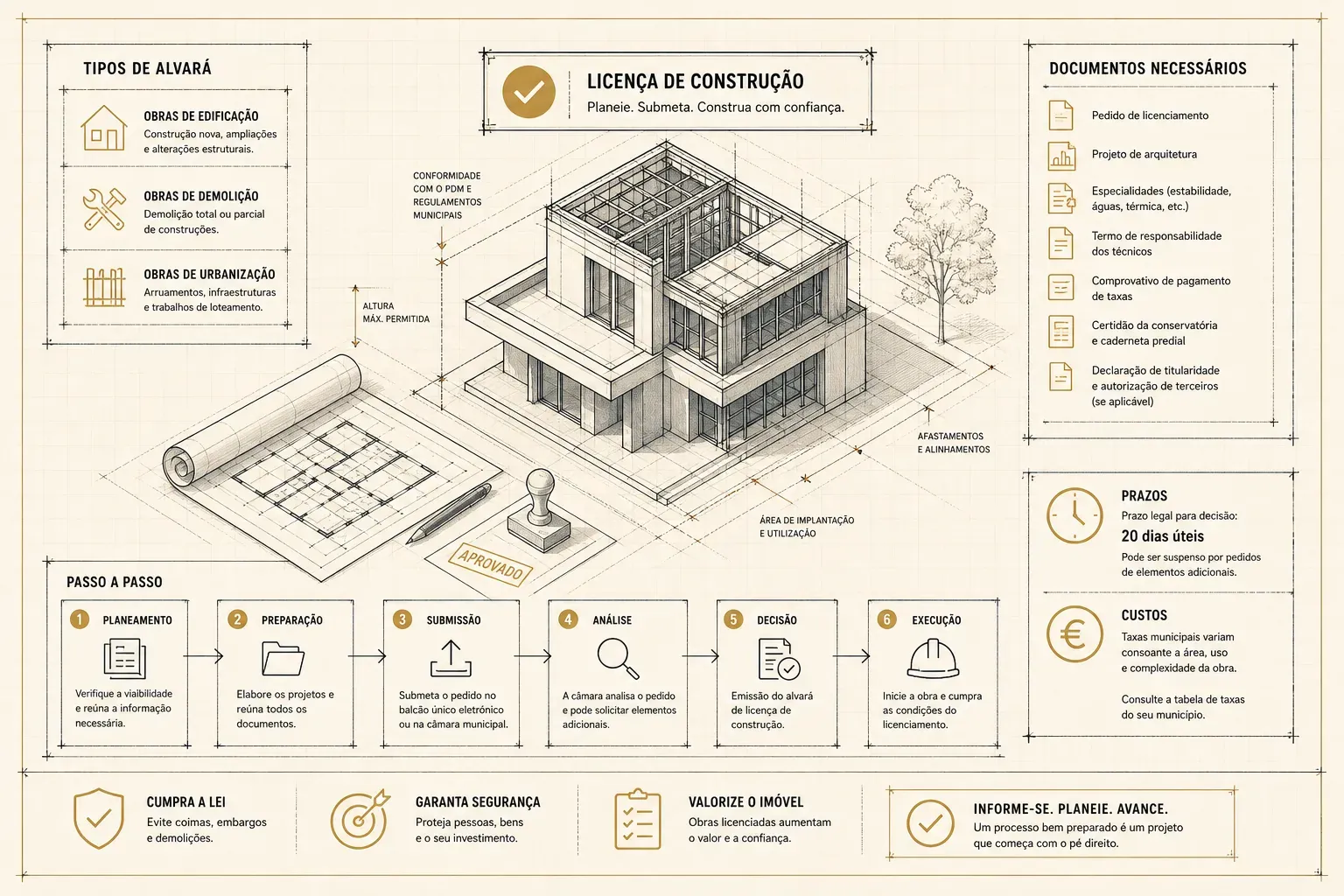
Municipal councils in Portugal reject or suspend permit applications when the written and drawn documents are not consistent with one another. A permitting file with inconsistencies between the architecture project and the engineering disciplines forces new internal consultations between firms, drawing revisions and additional time for resubmission. For the developer or owner, that means extra months before being able to move to construction, with all the costs associated with that waiting period.
The invisible costs of a fragmented team
When a contractor finds a contradiction or a gap in the documents, they issue an RFI: a formal request for clarification to the design team. Every RFI costs money: the professionals' response time, a possible work-front stoppage while clarification is awaited, and often changes to a project already under construction. On a fragmented team, RFIs multiply because no one has a global view of the project: each firm knows its own discipline well but is unaware of the others' decisions.
When coordination between disciplines is done well before permitting, conflicts are resolved on the drawings, where fixing them costs less. When it does not happen before construction, the same conflicts resurface on site as extra works, design changes and delays. The actual impact varies widely with the size, type and complexity of each project, so there is no benchmark percentage that can be applied to every case. But these costs follow a common pattern: they do not appear in the initial contract; they appear in the extra invoices over the months of construction.
On larger projects, integrating processes and setting a systematic schedule from the outset matter even more, because there are more interfaces between disciplines and between work fronts. In Portugal, where construction costs have been rising consistently, the room to absorb overruns is ever smaller. The question the developer should ask is not whether they can afford an integrated multidisciplinary design team, but whether they can afford the consequences of not having one.
What changes with a truly integrated team
Operational benefits
In an integrated architecture and engineering firm, the structural engineer is present from the moment the architect starts drawing the site layout. The disciplines engineer knows the level constraints right at the preliminary study. This is not about goodwill between independent firms: it is about process. Information shared early resolves problems that, caught late, cost far more to correct and sometimes no longer have a simple solution.
The role of design coordination with integrated BIM models is precisely this: the shared digital model lets every professional work on the same version of the project and lets clashes between systems be detected virtually before they are built in concrete or steel. Fewer clashes left to resolve on site generally means fewer RFIs, with a direct impact on costs and schedules. A conflict identified in the 3D model during detailed design costs hours of work; the same conflict identified on site costs days of stoppage, wasted materials and, frequently, disputes between the contractor and the design team.
Contractual and liability benefits
There is also a question of liability that is rarely discussed before problems appear. With separate firms, when something goes wrong on site, the first question is always the same: whose fault is it? The architect points to the engineer, the engineer points to the architect, and the client is left in the middle managing conflicts they should never have had to manage. In an integrated project delivery the client has a single point of contact and integrated coordination of all disciplines. This does not remove individual responsibilities: under Law 31/2009, each design author, the design coordinator, the site manager (diretor de obra), the site supervision director (diretor de fiscalização) and the other professionals involved answer for their own work, and each signs their own statement of responsibility (termo de responsabilidade). What disappears is the doubt about who ensures the coordination between them all. This simplifies contracts, reduces the surface for disputes and gives the client a much clearer position when problems arise, whether during construction or in the subsequent warranty period.
CertiAmb as a model of integrated consulting in Portugal
The CertiAmb team includes architects; structural, HVAC, utilities, electrical and fire-safety engineers; and technical consultants who work together from the preliminary study. The integration is in-house, which means the coordination process runs continuously throughout the project, rather than in a one-off meeting before handing the file to the council.
Projects in Lisbon, in the Comporta area (Grândola) and in Cartaxo illustrate this approach in practice. The client has a single point of contact for the entire technical scope, from the feasibility study to construction supervision. You can browse our news for examples and practical cases of this approach. This model removes the information breaks that occur when each project phase is handed to a different team, and reduces the exposure to overruns that a construction contract carries when the project arrives with gaps or inconsistencies.
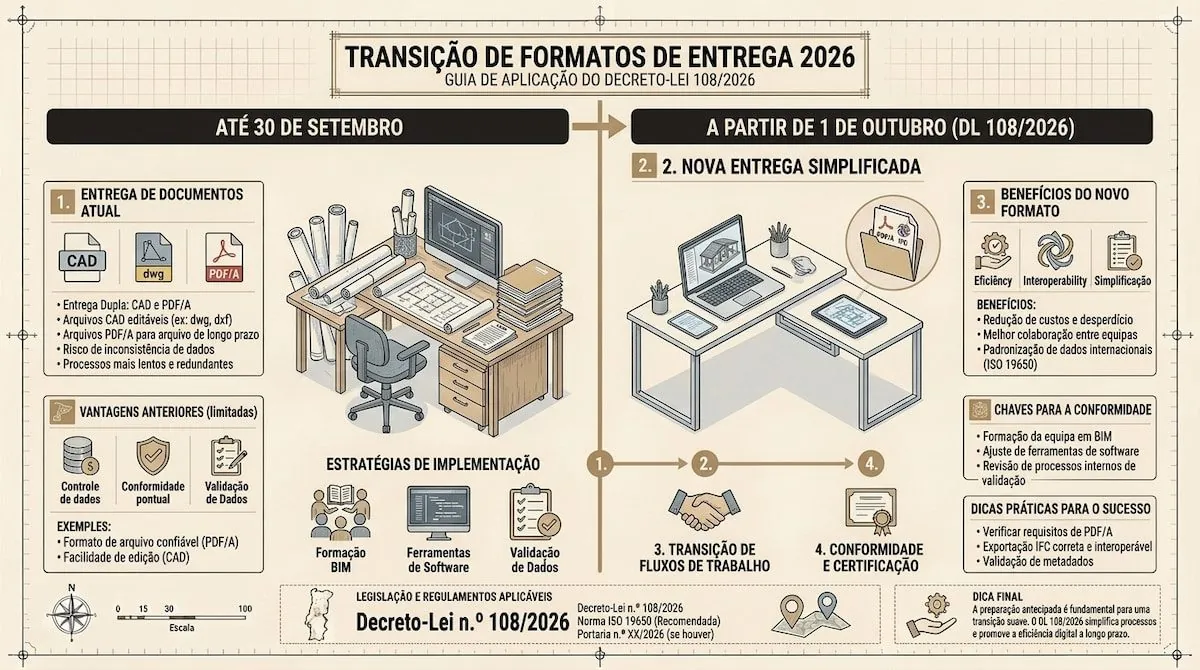
For property developers and private owners, the practical result is a project that reaches construction with less uncertainty. In municipalities where review times are already long for structural reasons, a coherent, coordinated permitting file makes a real difference to the developer's schedule. Adopting digital tools and processes that frame electronic permitting and construction control can speed up administrative reviews and reduce requests for clarification.
What to ask before hiring an integrated firm
Many firms present themselves as integrated without that integration being real in their working process. Telling a truly integrated firm apart from one that subcontracts disciplines with superficial coordination comes down to asking the right questions, before signing any proposal.
- Does the team actually include in-house disciplines engineers, or are they subcontracted with external coordination?
- Is there a documented design-coordination process before the documents are submitted for permitting?
- Does the firm have a proven track record of permit approvals in the municipalities relevant to your project?
- Does the working method include BIM or another coordination tool shared between architecture and engineering?
- Who coordinates the project and acts as the client's point of contact, and what are the professional registrations of the authors of each discipline (Ordem dos Arquitetos, Ordem dos Engenheiros or Ordem dos Engenheiros Técnicos)?
Beyond the answers, the way a firm responds is informative. A team that cannot clearly explain how it coordinates its professionals internally probably does not do so systematically. In design, whatever is not institutionalised fails precisely when the pressure is greatest, and pressure on site is always greater than expected.
There are also warning signs in a proposal that deserve attention. Fees that split architecture and engineering into separate contracts indicate that there is no real integration, only occasional coordination between separate entities. The absence of references for complete projects, from preliminary study to the end of construction, is another sign that the firm's working model is not the integrated cycle it presents. And the lack of a clear process for managing incompatibilities between disciplines is probably the most telling sign of all.
Conclusion
Hiring an integrated architecture and engineering firm is not a comfort preference or a privilege reserved for large developers. It is a decision with a direct impact on the final outcome of the project. Coordination done well before construction reduces extra works, requests for information and delays, and on-site conflicts decrease when the multidisciplinary design team works as one from the start.
The right choice starts with the right questions. A firm that brings architects, engineers and consultants together under a single coordination process, with a single point of contact, clear coordination and a proven municipal track record, is in a far better position to deliver a project without surprises. For these reasons, choosing an integrated architecture and engineering firm is often the most economical and secure decision a developer can make.
If you are planning a new build, a renovation or a real-estate development project, CertiAmb can help you understand what a truly integrated team means in your specific case. Talk to us: geral@certiamb.com · +351 910 441 470.
This article is provided for information purposes only and does not constitute legal, tax or technical advice. Each situation should be assessed individually by a qualified professional.