Insights
Energy certification of buildings: the SCE today and what changes under the new EPBD
The energy certificate stopped being a mere administrative formality a long time ago. Today it conditions the sale and rental of property, sets design requirements for new construction and major renovations, and is increasingly a factor in the value, or loss of value, of an asset. And the framework is about to tighten: the new European directive on the energy performance of buildings, approved in 2024, redesigns the entire system, from the concept of the zero-emission building to the progressive obligation to install solar energy.
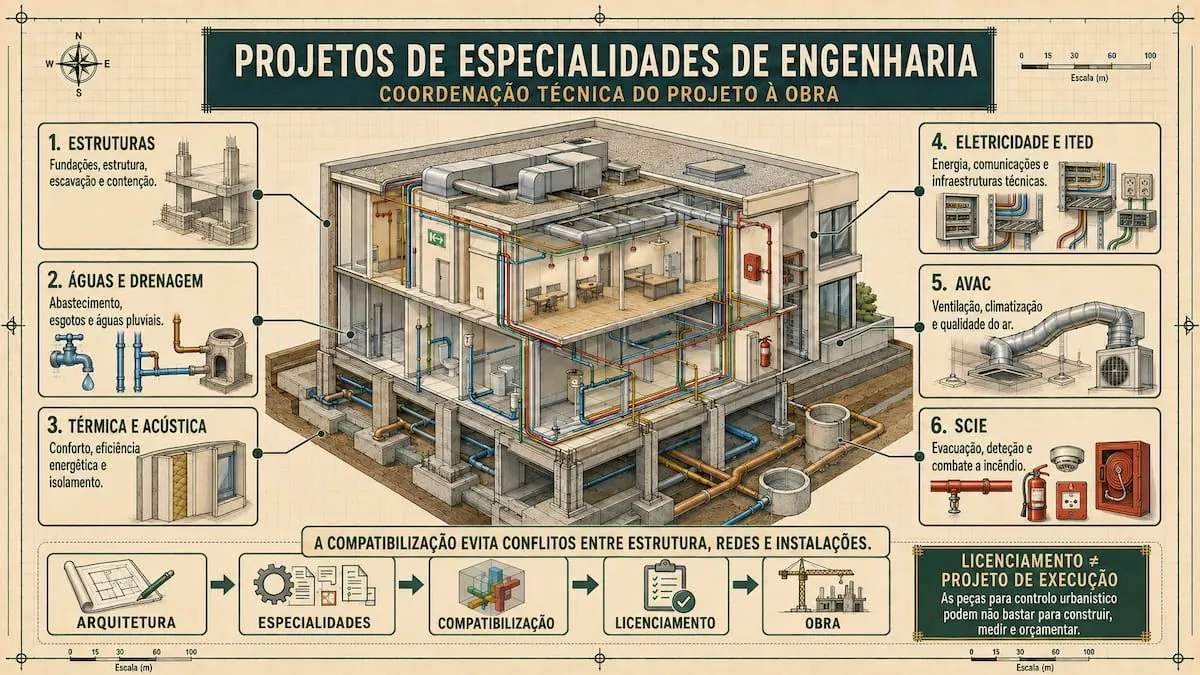
At CertiAmb, thermal performance is one of the disciplines we develop in an integrated way within our engineering-discipline projects, in coordination with the architecture, the HVAC systems and the other specialities. What matters is how Portugal's Energy Certification System for Buildings (SCE) works, when a certificate is mandatory, what the new EPBD brings and where its transposition in Portugal currently stands.
The SCE today: the legal framework
The central piece of legislation is Decreto-Lei n.º 101-D/2020, de 7 de dezembro, which establishes the energy performance requirements for buildings and regulates the SCE, transposing Directive (EU) 2018/844. Its rules have, in general, been in effect since 1 July 2021, when it revoked the previous regime (Decreto-Lei n.º 118/2013). In its current wording, it has been amended by Decreto-Lei n.º 102/2021, de 19 de novembro, which regulates access to and exercise of the activity of SCE technicians, and by Decreto-Lei n.º 11/2025, de 19 de fevereiro.
The essential elements of the system are as follows:
- the DGEG (Directorate-General for Energy and Geology) is responsible for supervision and enforcement; ADENE, the Portuguese energy agency, manages the system; indoor air quality sits with the health authorities (DGS and APA);
- certificates are issued by qualified experts registered with the SCE and are valid, as a rule, for 10 years;
- the Portuguese scale of energy classes runs from A+ to F;
- the minimum requirements for the building envelope and technical systems are set out in Portaria n.º 138-I/2021, applicable to residential and commercial or service buildings, whether new or renovated;
- new buildings must meet the NZEB standard (nearly zero-energy buildings), with a significant share of renewable energy.
All the regulations in force are gathered on the SCE portal, managed by ADENE. The DGEG, as the supervisory and enforcement body, also has a dedicated SCE page.
When is an energy certificate mandatory?
The energy certificate is required at three main moments:
- New construction: the pre-certificate accompanies the permitting process and the definitive certificate is issued for the use of the building;
- Major renovations, the refurbishment is subject to performance requirements and to new certification;
- Sale or rental, the certificate must exist from the moment the property is placed on the market: the energy class must be shown in advertisements and the document is handed over when the contract is signed.
Larger commercial and service buildings are also subject to specific obligations to display the certificate and to periodic inspections of their technical systems. Non-compliance has a real cost: the absence of a certificate is an administrative offence punishable with a fine of €250 to €3,740 for natural persons and €2,500 to €44,890 for legal persons.
The new EPBD: Directive (EU) 2024/1275
Directive (EU) 2024/1275 of 24 April 2024, the recast of the EPBD (Energy Performance of Buildings Directive), entered into force on 28 May 2024, with a transposition deadline of 29 May 2026. The goal is ambitious: a decarbonised, zero-emission building stock by 2050. The main changes are:
- Zero-emission buildings (ZEB): the new standard that succeeds NZEB: it applies to new buildings owned by public bodies from 1 January 2028 and to all new buildings from 1 January 2030;
- Minimum energy performance standards (MEPS) for non-residential buildings, thresholds that will require the renovation of the worst-performing buildings: 16% of the stock by 2030 and 26% by 2033;
- A residential renovation trajectory: a reduction in the average primary energy use of the housing stock of at least 16% by 2030 and 20 to 22% by 2035, with at least 55% of that reduction achieved in the worst-performing buildings;
- Solar energy, progressive deployment, where technically and economically feasible: on larger new public and non-residential buildings from the end of 2026 and on new residential buildings by 31 December 2029;
- The renovation passport: a staged, building-by-building roadmap towards deep renovation;
- Fossil-fuel boilers: the end of financial incentives for stand-alone boilers since 1 January 2025 and a trajectory towards their phase-out by 2040;
- Harmonised energy certificates: a common European template and an A-to-G scale, in which A corresponds to zero-emission buildings, which will entail revising the current Portuguese scale (A+ to F).
Transposition in Portugal: the state of play
Portugal opted for a two-stage transposition. The first stage is complete: Decreto-Lei n.º 11/2025, de 19 de fevereiro, partially transposed the directive, amending Decreto-Lei n.º 101-D/2020 to end financial incentives for the installation of stand-alone fossil-fuel boilers, with effect backdated to 31 December 2024.
The second stage, the in-depth revision of Decreto-Lei n.º 101-D/2020 and its implementing regulations, was prepared by a working group coordinated by ADENE, together with the DGEG, the APA, the LNEC, the IHRU, the IMT and the IMPIC. The European transposition deadline expired on 29 May 2026. As of this update (15 September 2026), the full national transposition package has not yet been published in the Diário da República, so in Portugal the directive remains only partially transposed, through Decreto-Lei n.º 11/2025. In parallel, the directive provides for the current long-term renovation strategies to be replaced by national building renovation plans: in Portugal, the National Building Renovation Plan (PNRE).
In practice, this means that the SCE continues, for now, to be governed by Decreto-Lei n.º 101-D/2020 as currently worded, but anyone with projects in preparation should already be designing their solutions with the incoming framework in mind.
What this means in practice for owners and developers
The implications differ depending on where you stand:
- If you are going to build, anticipate the ZEB standard and readiness for solar energy: a well-resolved orientation and envelope, electrified systems and on-site renewables cost far less when considered from the preliminary-study stage;
- If you own commercial or service buildings, assess the current class now: the MEPS will require works on the worst-performing buildings, and a low class tends to translate into lower value and reduced liquidity;
- If you are buying, treat the energy class as a factor in the price and in future running costs: a subject we develop in the articles building versus buying in Portugal and guide for foreign investors;
- If you are renovating, support schemes will be increasingly targeted at the worst-performing buildings and vulnerable households, but with no support for fossil-fuel equipment.
Mistakes and risks to avoid
In our experience, the most frequent problems in this area are avoidable:
- advertising a property without its energy class or signing a contract without a valid certificate, with the associated risk of fines;
- launching a major renovation without a thermal performance design, only to discover late in the day that the solution does not meet the minimum requirements;
- installing fossil-fuel systems today without weighing the European trajectory towards 2040 and the end of incentives;
- ignoring the mandatory periodic inspections of technical systems in commercial and service buildings;
- treating the certificate as a last-minute piece of paper, rather than a design tool that guides decisions on the envelope, the systems and renewable energy.
CertiAmb's integrated approach
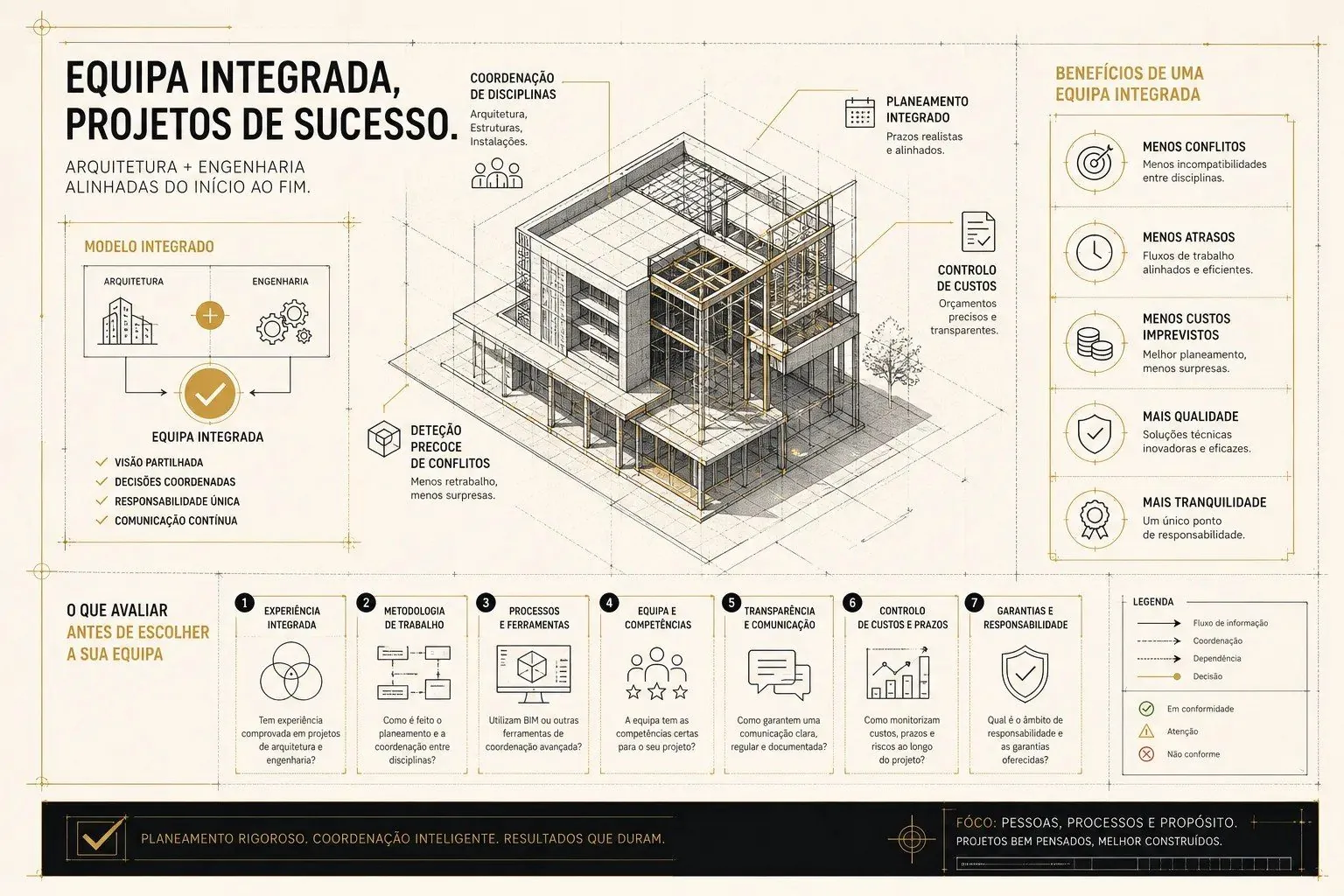
Energy performance is not resolved with an isolated calculation at the end of the process: it results from decisions in architecture (orientation, openings, shading), in engineering (envelope, HVAC, domestic hot water, renewables) and in execution on site. That is why, at CertiAmb, the thermal performance design is developed together with the architecture and permitting project and the other engineering disciplines, and compliance is followed through to the construction phase via our technical consulting and site supervision services.
This integration is the best protection against regulatory risk: a building designed today with a ZEB logic will be ahead of the market when the new rules take full effect.
Frequently asked questions
When is an energy certificate mandatory?
For new buildings, for major renovations and whenever a property is sold or rented out. The energy class must be shown in advertisements and the certificate is handed over when the contract is signed.
How long is an energy certificate valid?
As a rule, 10 years. For large commercial and service buildings (GES), validity is generally 8 years, and may be shortened where there is no maintenance plan or valid inspection report for the technical systems. The certificate is issued by a qualified expert registered with the SCE and recorded by ADENE.
What are the fines for not having a certificate?
From €250 to €3,740 for natural persons and from €2,500 to €44,890 for legal persons, under Decreto-Lei n.º 101-D/2020.
What is a zero-emission building (ZEB)?
It is the new standard created by Directive (EU) 2024/1275: a building with a very high performance and no on-site carbon emissions from fossil fuels. It applies to new buildings owned by public bodies from 1 January 2028 and to all new buildings from 1 January 2030.
Does the new EPBD already apply in Portugal?
Partially: Decreto-Lei n.º 11/2025 transposed the ban on incentives for fossil-fuel boilers. The full transposition has not yet been completed: the deadline expired on 29 May 2026 and, as of this update (15 September 2026), the national package has not yet been published.
Closing notes
Energy certification is moving from a documentary obligation to a central axis of the value and compliance of buildings. Between the SCE in force and the new EPBD in transposition, the difference between anticipating and reacting is measured in construction costs, fines avoided and property value. If you are going to build, renovate, sell or invest and want energy performance working in your favour, talk to the CertiAmb team.
This article is provided for information purposes only and does not constitute legal, tax or technical advice. Each situation should be assessed individually by a qualified professional.