
News
Setúbal: fire-use regulation takes effect on 28 October
Municipality: Setúbal
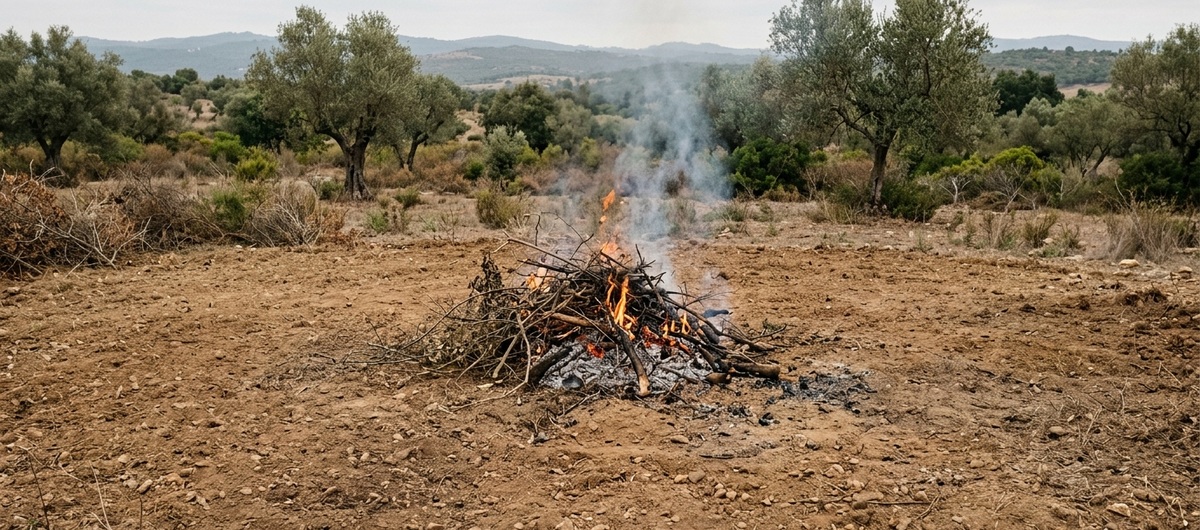
Owners planning to clear land in Setúbal should check how the cut vegetation will be dealt with. The Municipal Fire-Use Regulation was published on 13 October 2026 through Aviso 25223/2026/2 and takes effect on 28 October, under Article 34. It applies within the municipality of Setúbal.
Burning piles and extensive burning follow different procedures
Queima de amontoados means burning cut plant waste gathered into small piles. Queimada covers activities such as pasture renewal, stubble burning and burning cut vegetation that has not been piled up. This distinction in Article 4 determines the procedure.
Burning piles requires prior notification or authorisation, recorded on the ICNF Queimas e Queimadas platform by the applicant or municipality (Article 10). Extensive burning requires authorisation, an application 10 working days in advance, and supervision by an accredited technician or the teams listed in Article 13(5) (Article 14). The ten-day requirement is not a general rule for every kind of burning.
The date and location also matter
As a general rule, Articles 9 and 13 prohibit these operations from 1 June to 31 October and when rural fire danger is very high or maximum. For burning piles, prior notifications are also suspended when the Fire Weather Index (FWI) is 24 or higher, or when danger ranges from moderate to maximum (Article 9(5)).
The regulation prohibits these operations less than 30 metres from buildings. It also imposes location restrictions, including specified zones of the Sado Estuary Nature Reserve and total-protection areas of the Arrábida Natural Park. Check the land classification and the qualifications in Article 5 before using a notification intended for rural land. Private ownership does not remove that requirement.
Exceptions have their own conditions
Article 27 provides a procedure for burning piles required by mandatory plant-health measures on rural land, including during June to October or when fire danger is very high or maximum. Municipal authorisation and licensing, supervision and an application at least 10 working days in advance are required. This is not an exemption for routine land clearance.
Article 16 prohibits campfires for recreation, heating, leisure, cooking or festivities, subject to the exceptions in Article 27(7) and the requirements applicable to each case. The technical fire operations specified in Article 27(6) fall outside the scope of this regulation. This news item focuses on vegetation residues; these exceptions do not constitute a general permission to use fire.
Checks before arranging land clearance
- Identify the land and check its classification, distance from buildings and any protected-area rules.
- Agree how the plant waste will be handled. Article 31 provides for alternatives in agricultural and forestry activities, including chipping, incorporation into the soil, composting and biomass recovery.
- If fire is involved, confirm the procedure, supervision and applicable fees. Burning piles is generally fee-exempt, with an exception for requested support; extensive burning is subject to fees (Articles 10 and 14).
- Check the decision again before starting: it can change with weather conditions or alert declarations. An automatic response does not remove liability for damage or override other legal restrictions (Articles 10, 11 and 14).
When preparing work on a building or plot, CertiAmb’s technical consultancy can help assess project constraints. Fire-use procedures and confirmation that the decision remains favourable should be addressed with the competent municipal services.
Official source
Aviso 25223/2026/2: Municipal Fire-Use Regulation, Articles 4, 5, 9 to 14, 27, 31 and 34. This item explains the newly published regulation; it does not assume that every restriction is new compared with the previous rules.