

Trees on a building plot: what can you cut, prune or transplant?
Cork oaks, holm oaks, olive trees and holly: permissions, classified trees and root protection before building on a plot in Portugal.
Read more →Insights
Ideas, analysis and guides from CertiAmb.
Cork oaks, holm oaks, olive trees and holly: permissions, classified trees and root protection before building on a plot in Portugal.
Read more →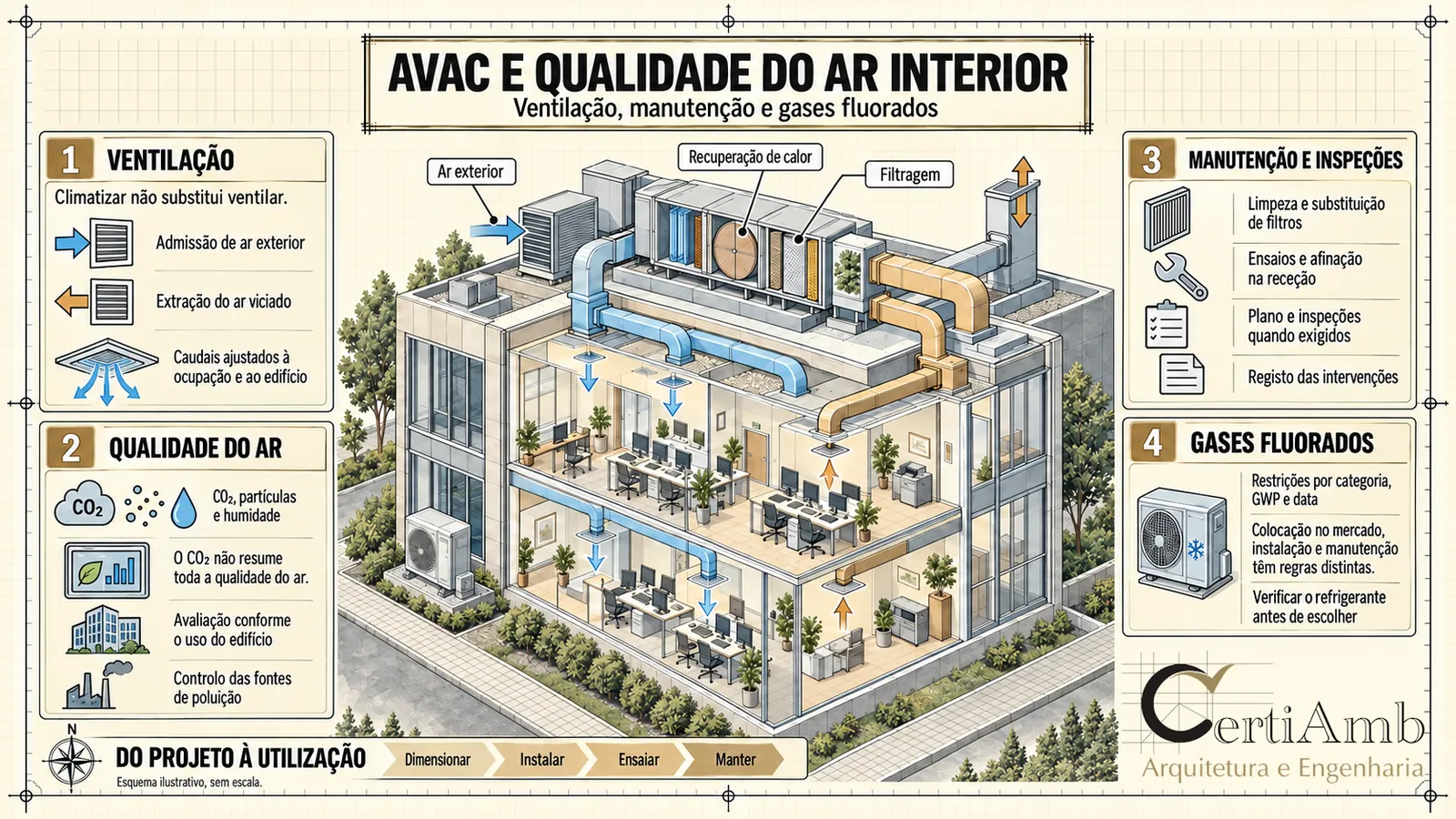
Fresh-air rates, IAQ protection thresholds, air-conditioning inspections and the European F-gas timetable: what an HVAC design must comply with today, and what the new EPBD is about to change.
Read more — HVAC and indoor air quality in buildings: ventilation, inspections and the F-gas transition →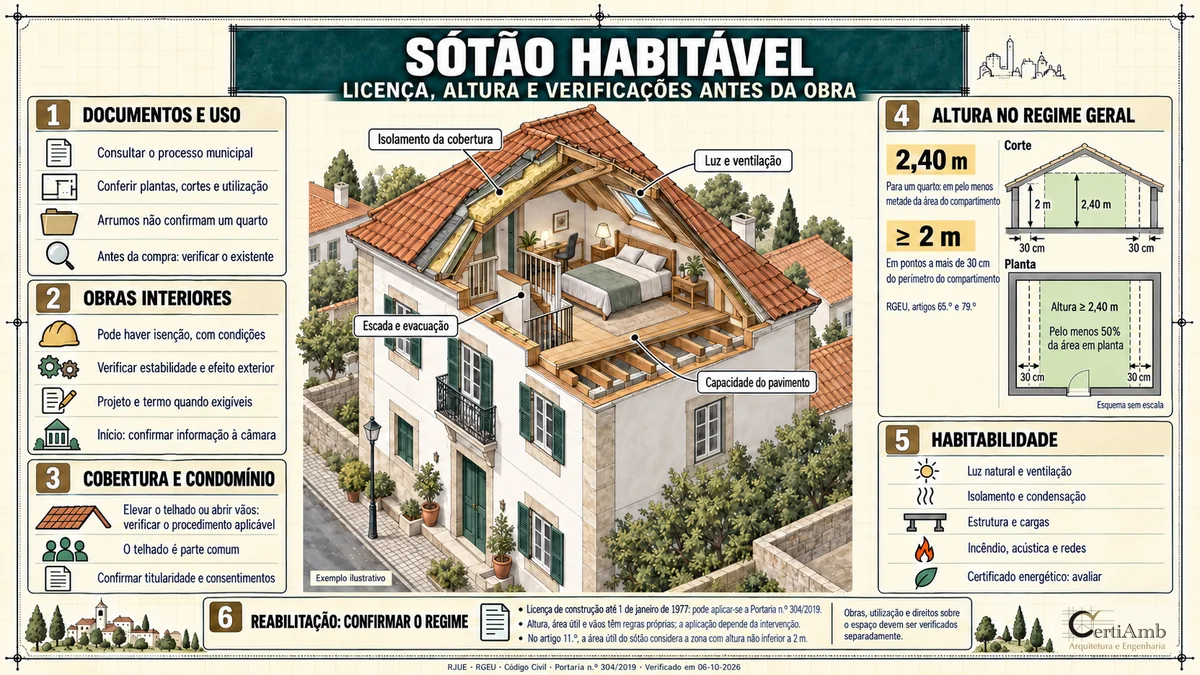
Converting a loft or attic into a bedroom in Portugal? Check permits, minimum height, residential use and condominium rights before work starts.
Read more →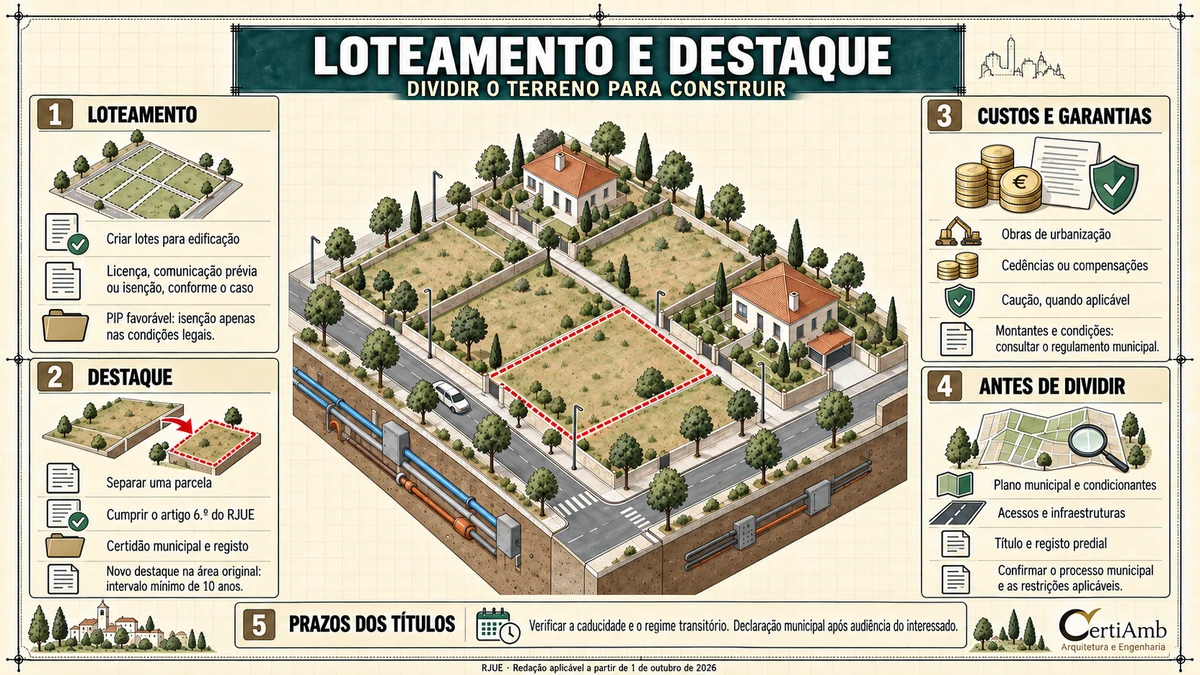
Subdivision and plot detachment: procedures, location, land cessions, security and title deadlines, with the changes that took effect on 1 October 2026.
Read more →
Railway easements, non aedificandi zones and the new Level Crossing Regulation (DL 183/2026): what restricts building or subdividing near a railway line.
Read more →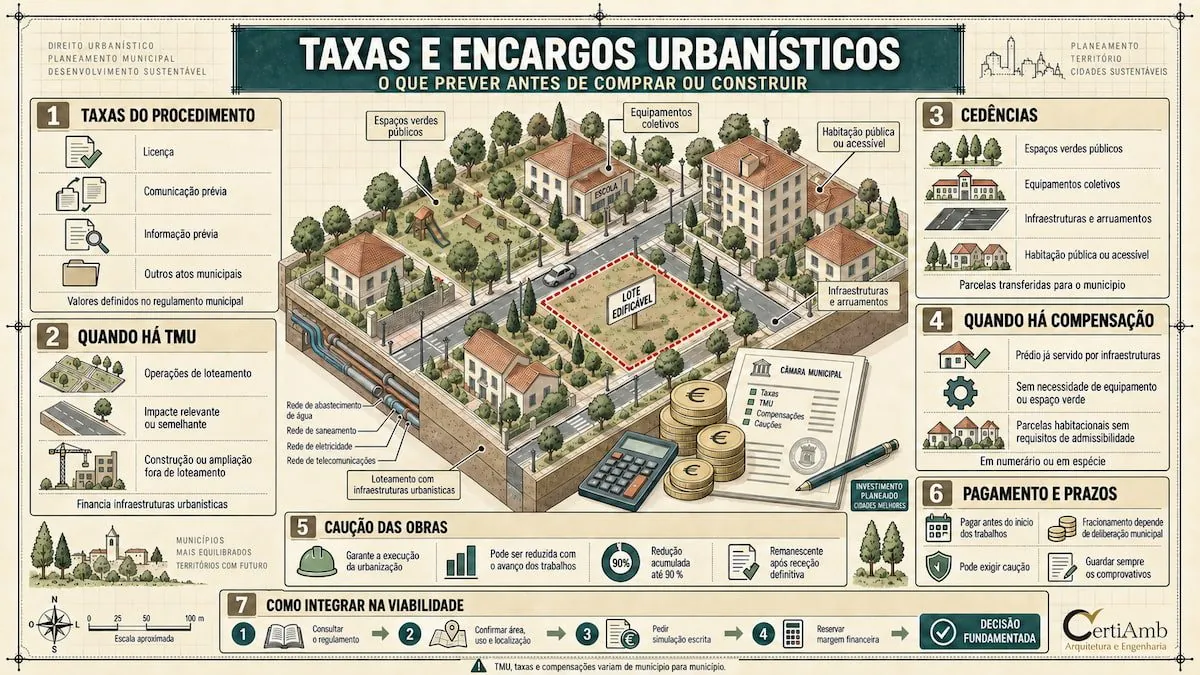
What a developer pays beyond the design in Portugal: the municipal urbanisation tax (TMU), permit fees, land cessions, cash compensations and bonds, and how to estimate them early.
Read more →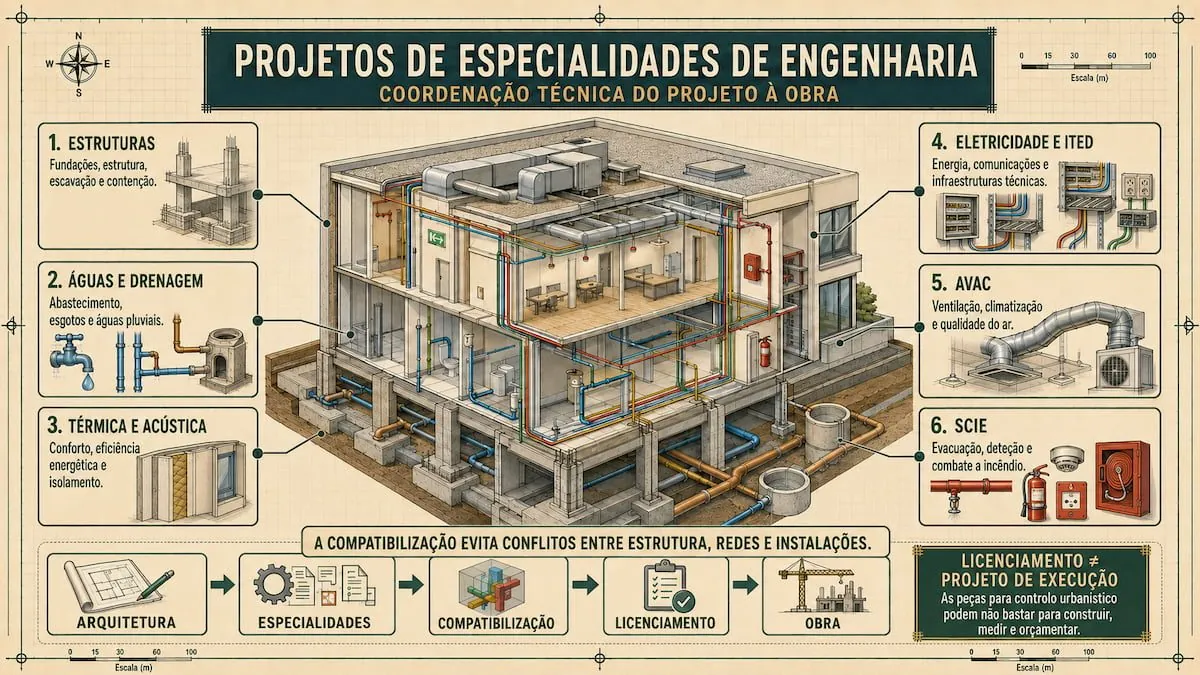
What the engineering disciplines are: structures, water, thermal, acoustics, HVAC, fire safety, gas, electricity and ITED, when permitting requires them and why coordination decides the cost and schedule of your build.
Read more →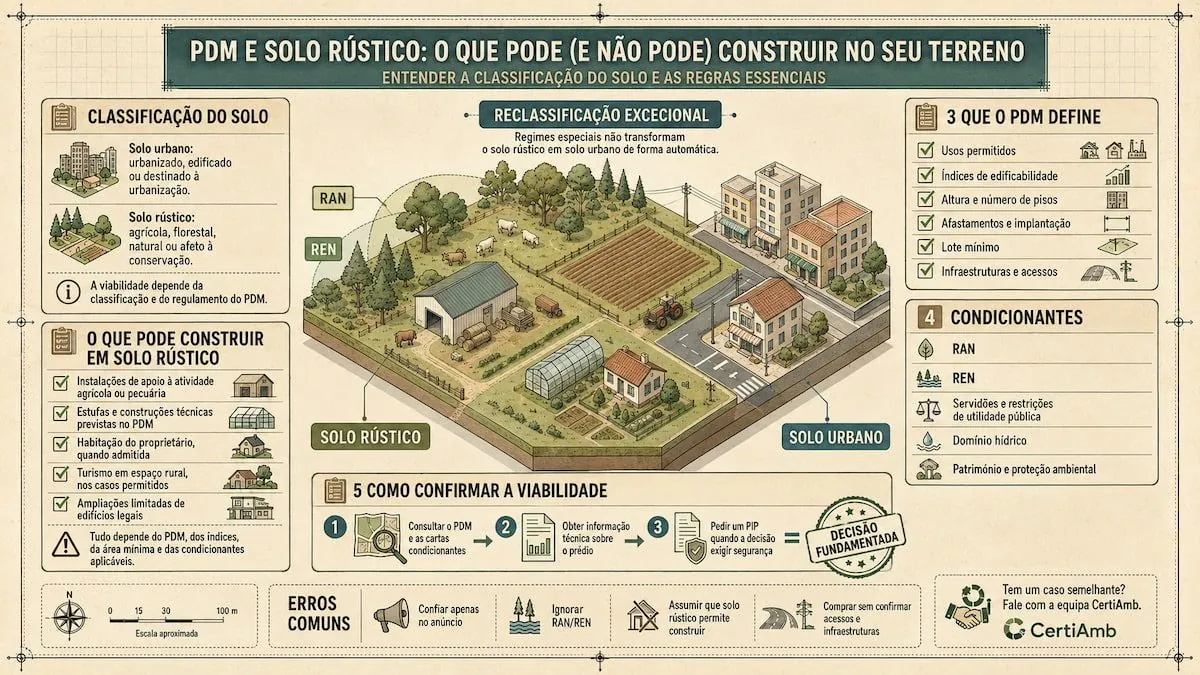
Urban or rural land? What the Portuguese PDM lets you build on your plot, how the land law changed (DL 117/2024, Law 53-A/2025) and how to check before you buy.
Read more →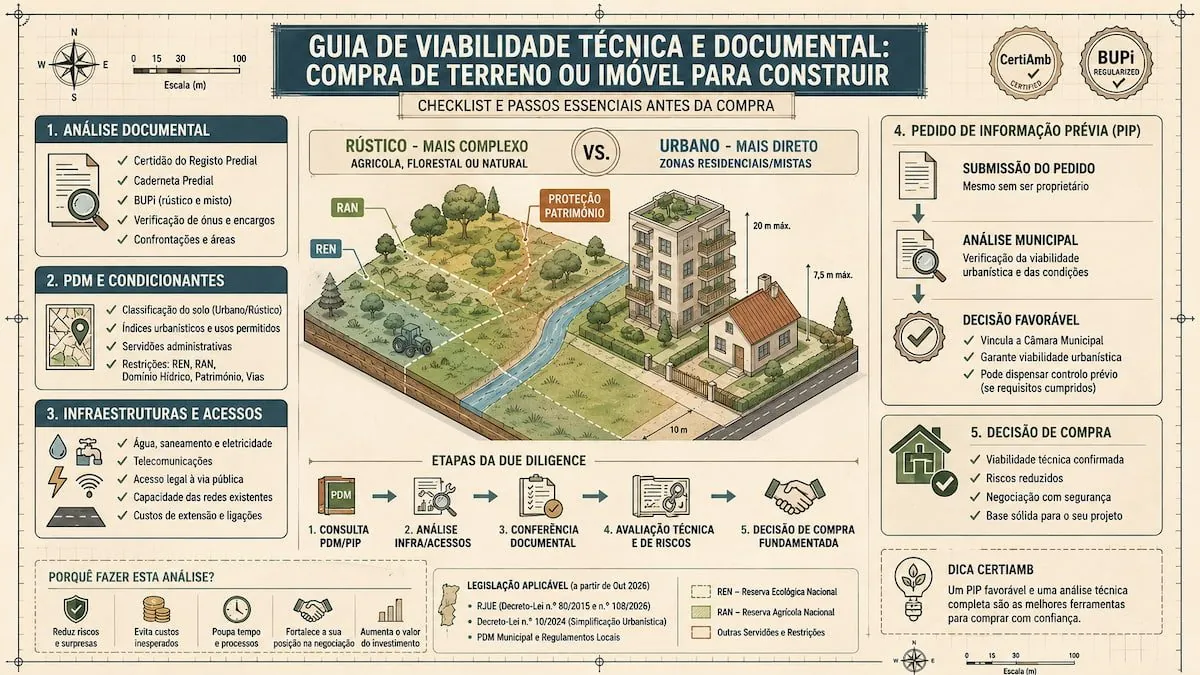
Before buying land or property to build on, a feasibility checklist avoids years of deadlock: land registry, tax record, PDM zoning, prior information request, utilities and the legality of existing buildings.
Read more →
Private swimming pools in Portugal: when a pool is exempt from prior control under the RJUE, what changes on rustic land, the engineering of structure and hydraulics, child safety and VAT.
Read more →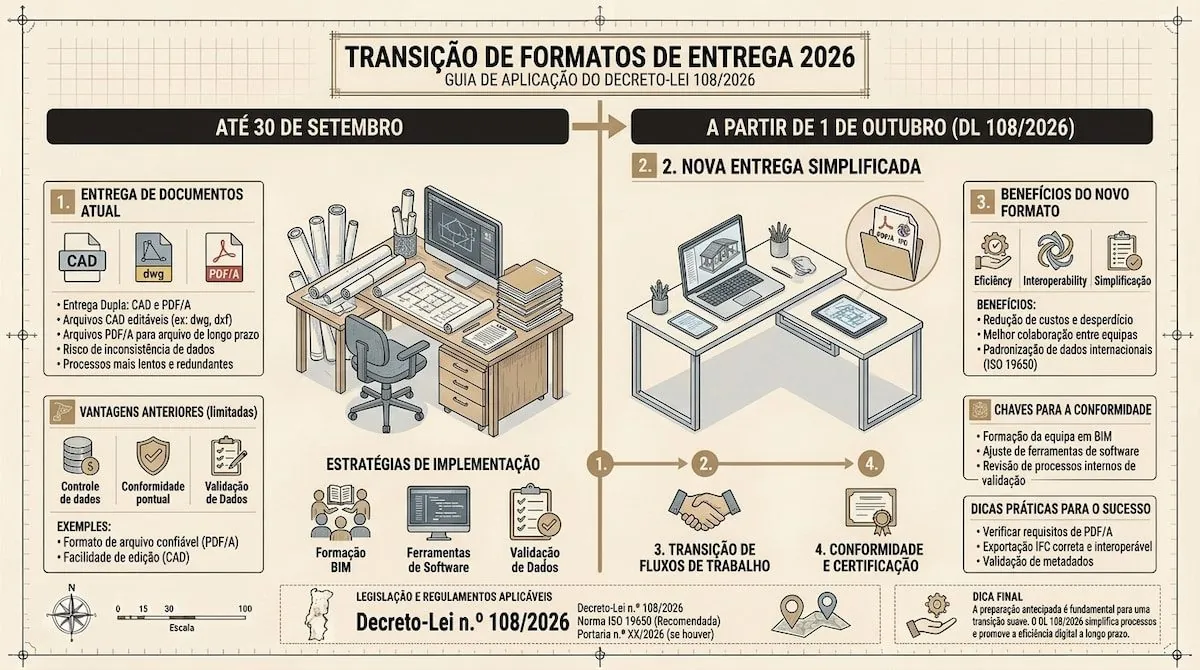
Instruction elements, forms, formats and certificates of responsibility: what Portaria n.º 320/2026/1 requires in applications from 1 October 2026.
Read more →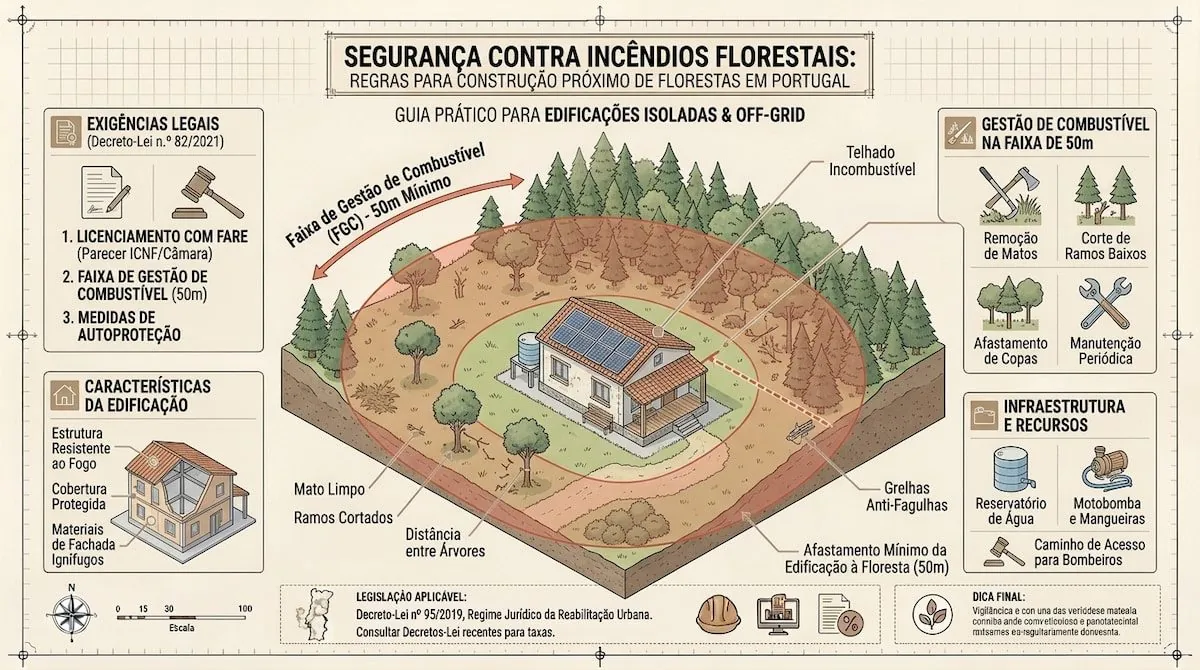
Fuel management strips, 50-metre setbacks and fire hazard maps: what DL 82/2021 (SGIFR) means for anyone wanting to build on rural land next to forest in Portugal.
Read more →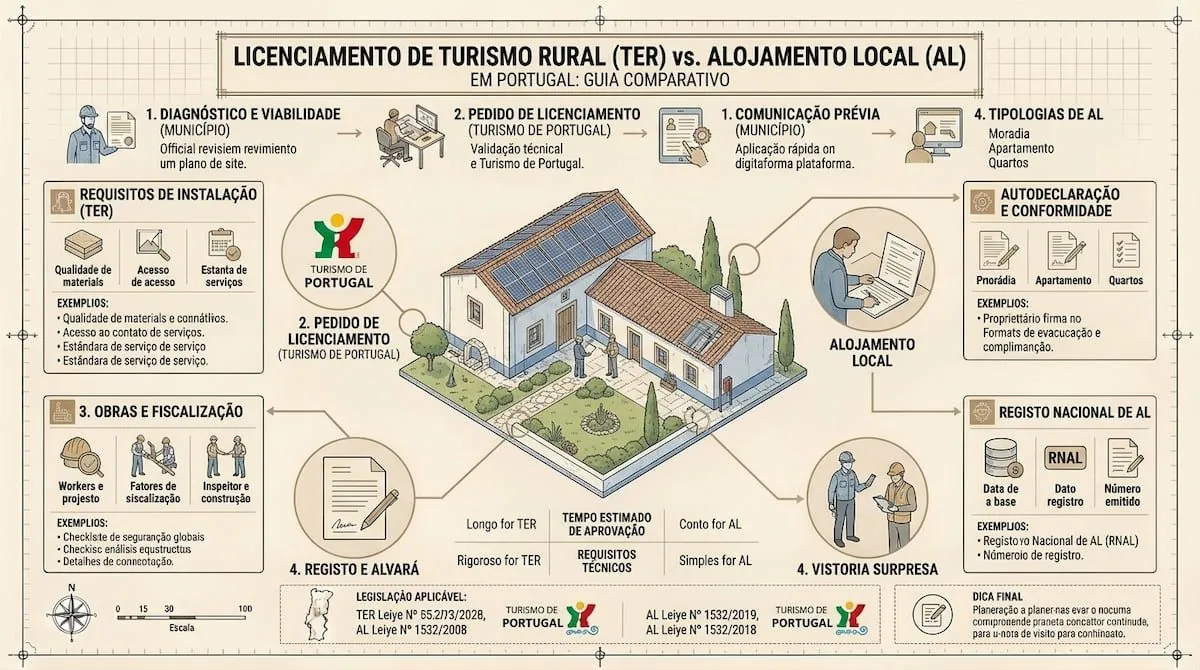
How to license a rural tourism (TER) development in Portugal: RJET, Portaria 937/2008, TER vs local accommodation in 2026, technical requirements and process.
Read more →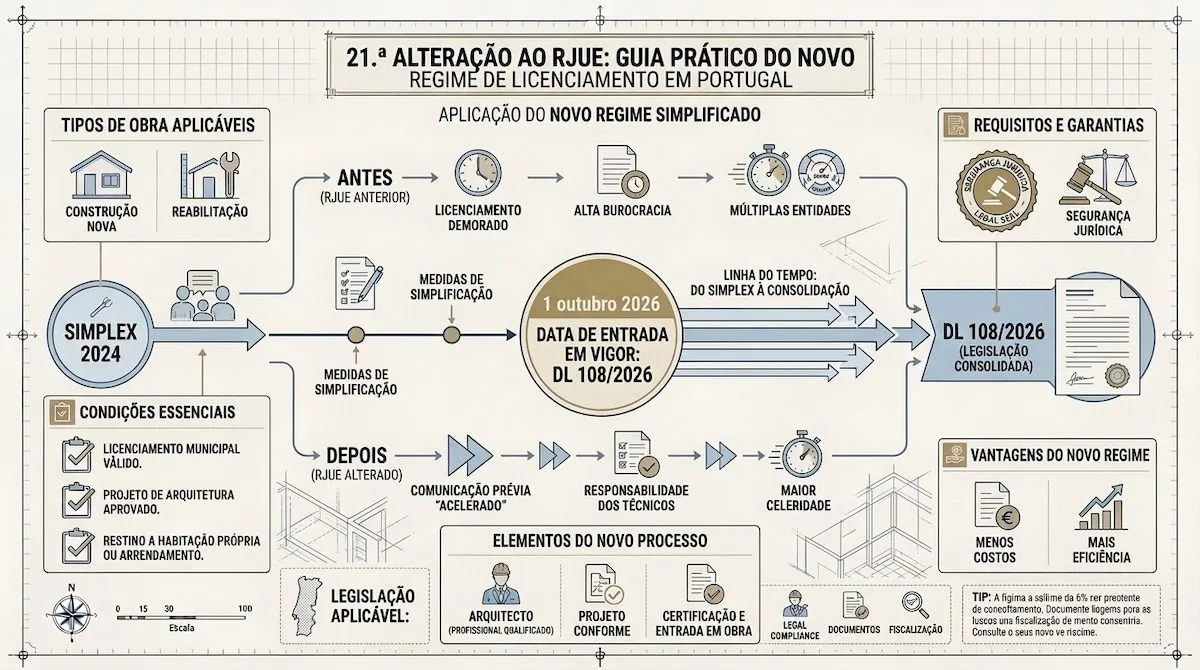
DL 108/2026 took effect on 1 October 2026: prior notification without screening, shorter deadlines, urban planning titles and a 3-year nullity limit.
Read more →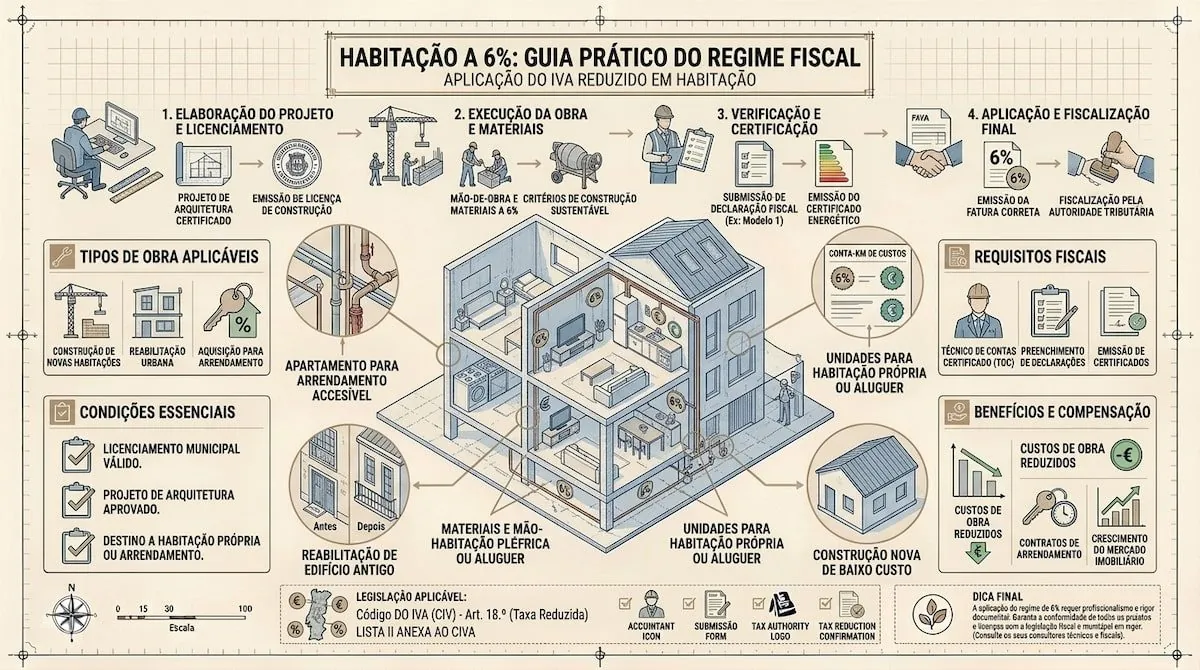
DL 97/2026 applies 6% VAT to housing works contracts: conditions, the €660,982 and €2,300 limits, self-build refunds, deadlines and penalties.
Read more →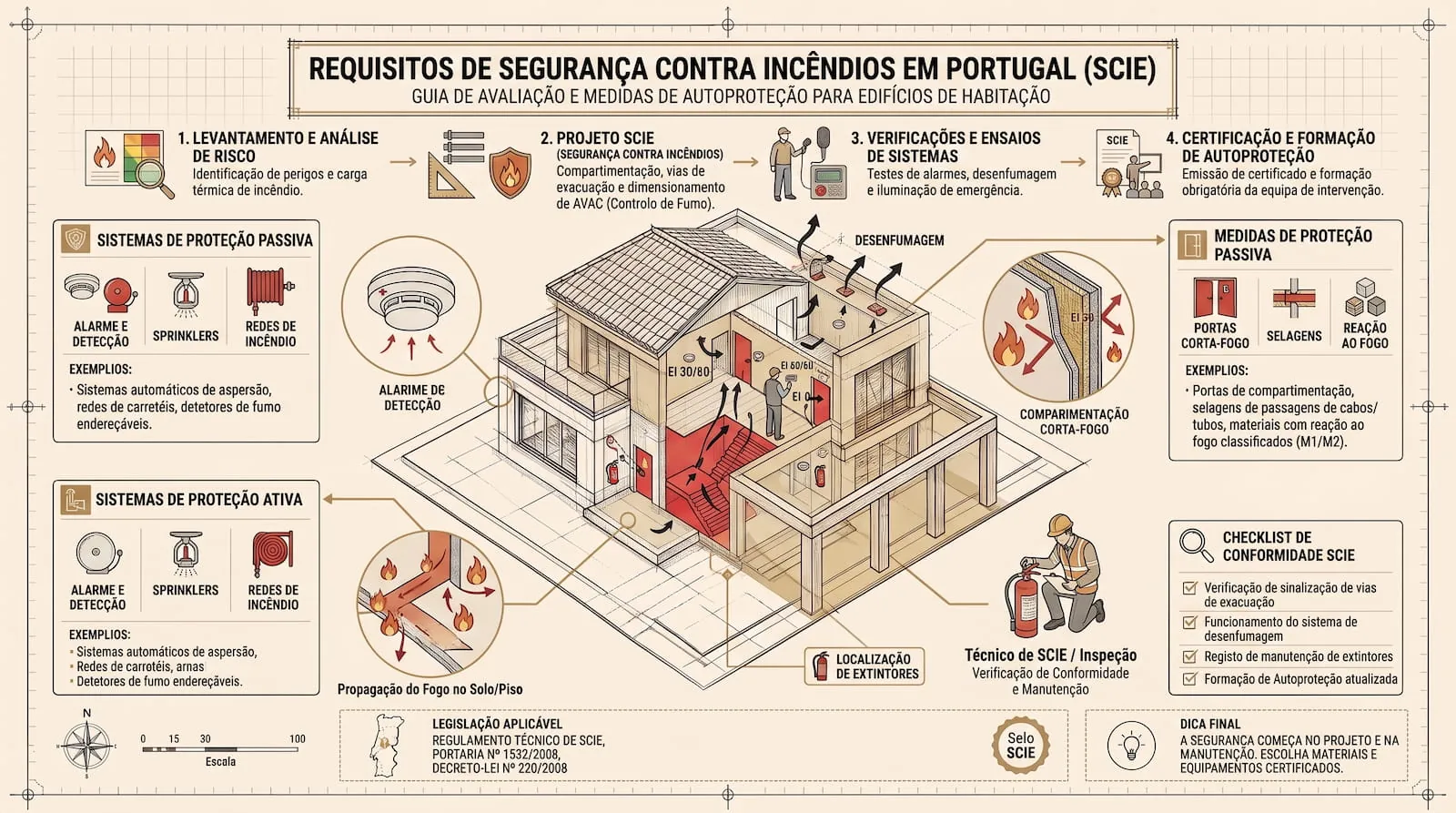
Portugal's fire safety regime (DL 220/2008 and Portaria 1532/2008): occupancy types and risk categories, when a dedicated design or a fire safety form is required, self-protection measures and regular inspections.
Read more — Fire safety in buildings (SCIE): from the design stage to self-protection measures →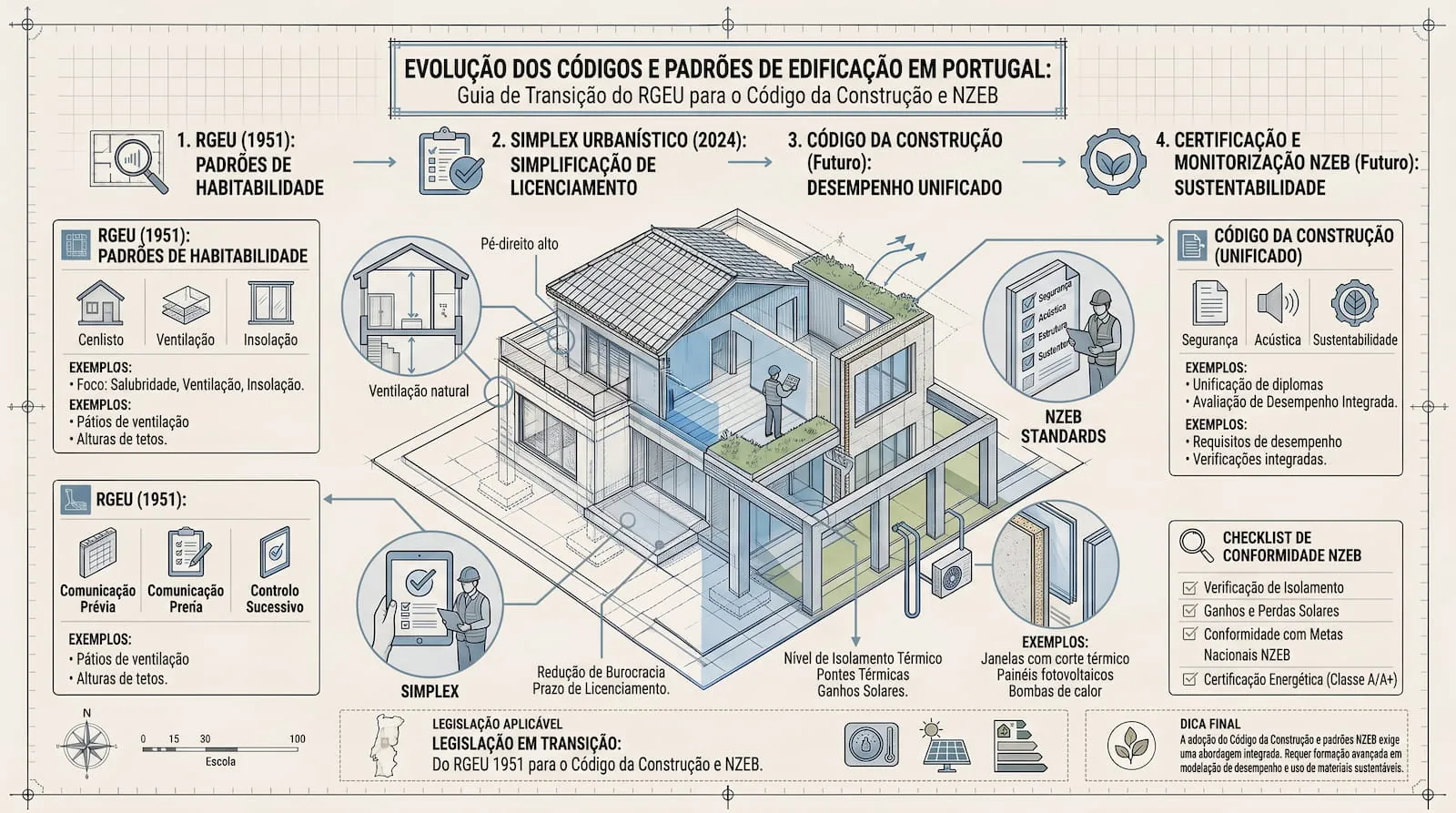
The repeal of Portugal's 1951 RGEU has been postponed: the regulation remains in force. What applies to projects today and where the future Building Code stands.
Read more →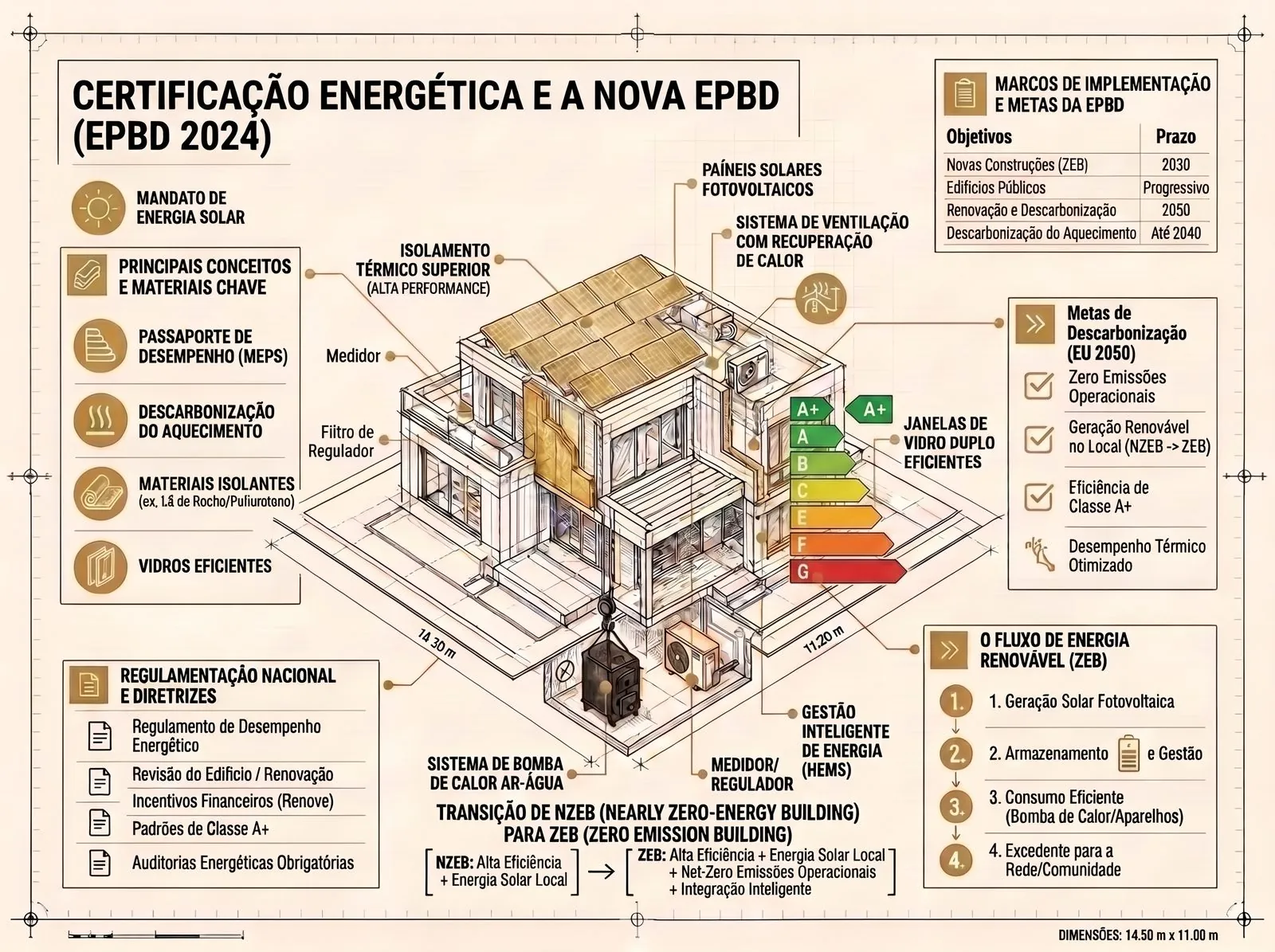
How Portugal's Energy Certification System works, when a certificate is required and what the new European directive brings, from the ZEB standard to mandatory solar and the state of transposition in Portugal.
Read more — Energy certification of buildings: the SCE today and what changes under the new EPBD →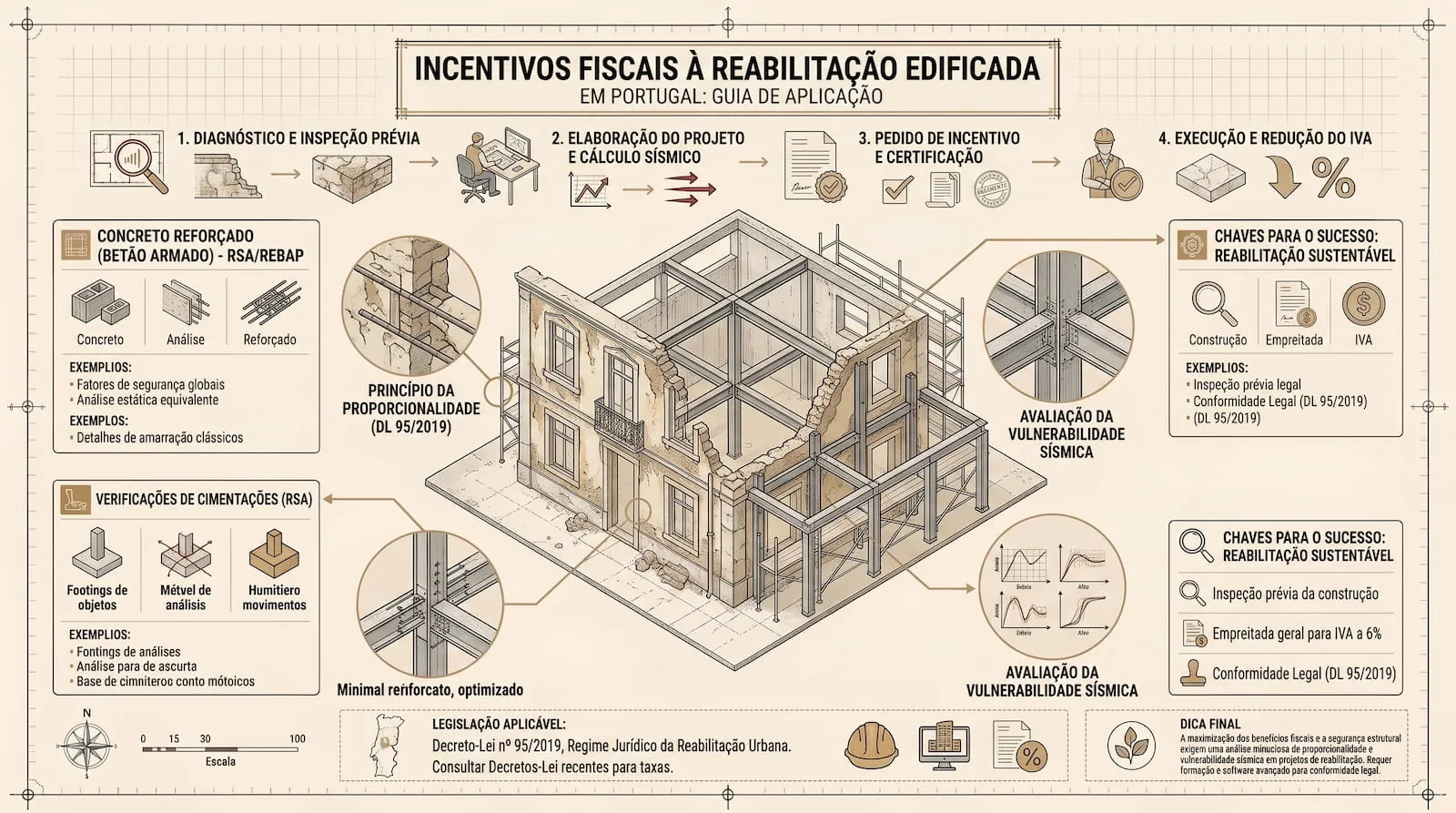
The RJRU, ARU and ORU, IMI and IMT exemptions, 6% VAT, DL 95/2019 and IFRRU financing: the essentials for rehabilitating with confidence, including the changes under DL 108/2026.
Read more — Urban rehabilitation: legal regime, ARU, tax incentives and what changes in 2026 →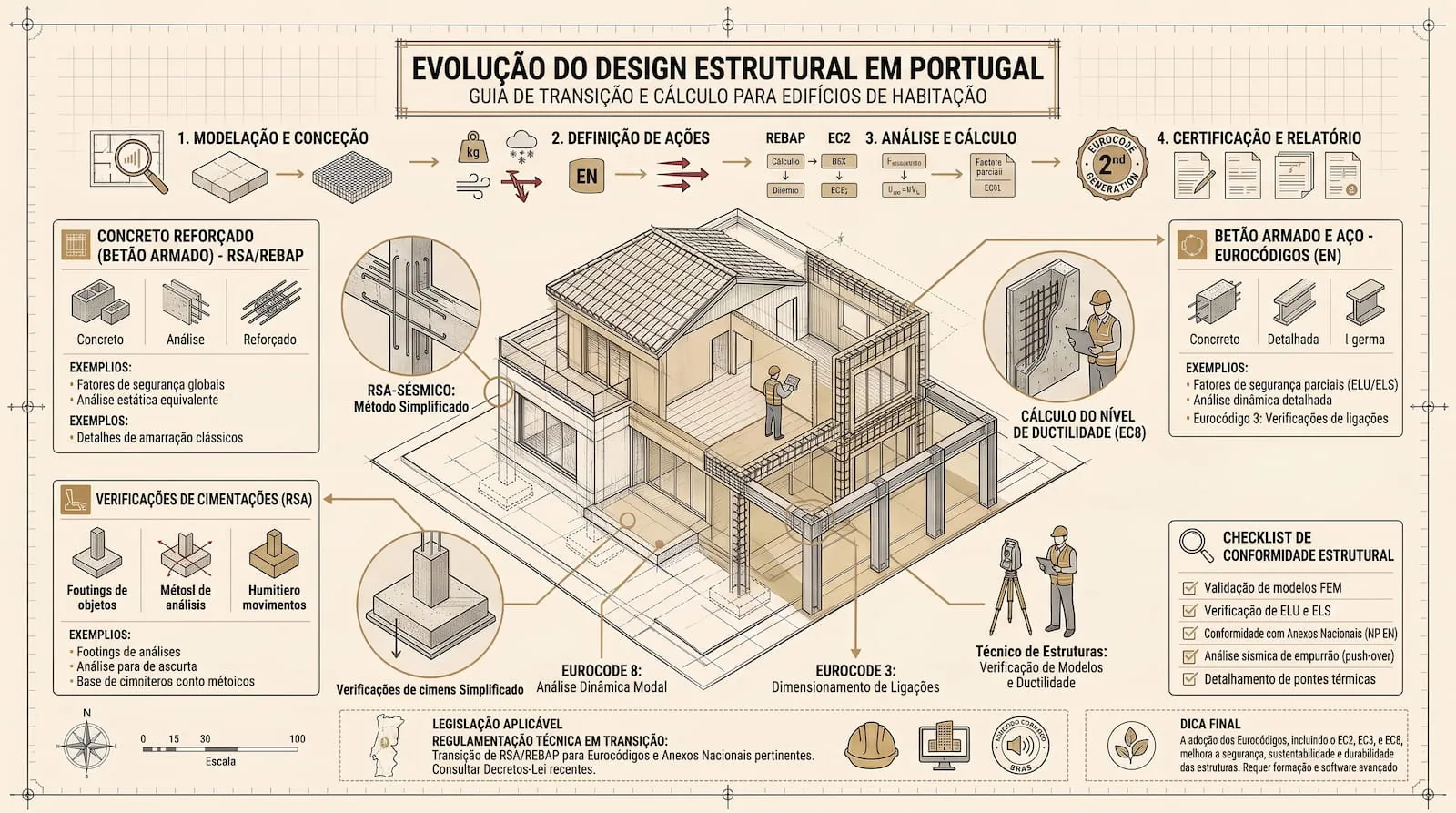
From the RSA and REBAP to the Eurocodes: the legal framework for structural design in Portugal, seismic assessment in rehabilitation and the second generation already on the horizon.
Read more — Structures: from the RSA and REBAP to the Eurocodes →
RRAE and RGR: the acoustic requirements for buildings in Portugal, testing at the permitting and occupancy stages, mistakes to avoid on site and what changes with the new RJUE.
Read more — Building acoustics: the RRAE, acoustic testing and what changed in permitting →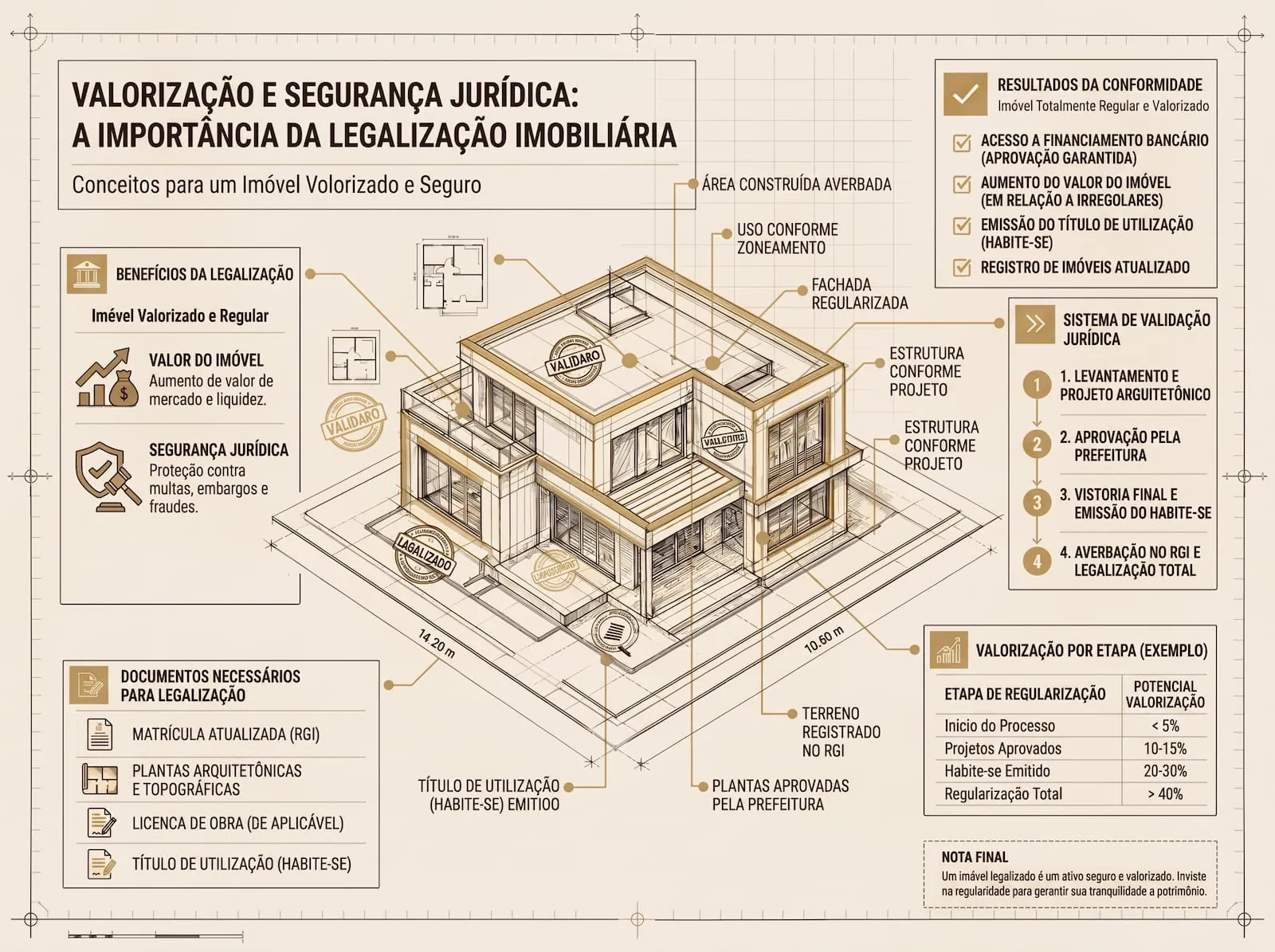
Annexes, extensions and unpermitted works have a legal route to regularisation: article 102.º-A of the RJUE. We explain the procedure, the fines and the impact on selling the property.
Read more — Legalising existing buildings: how to regularise works built without a licence →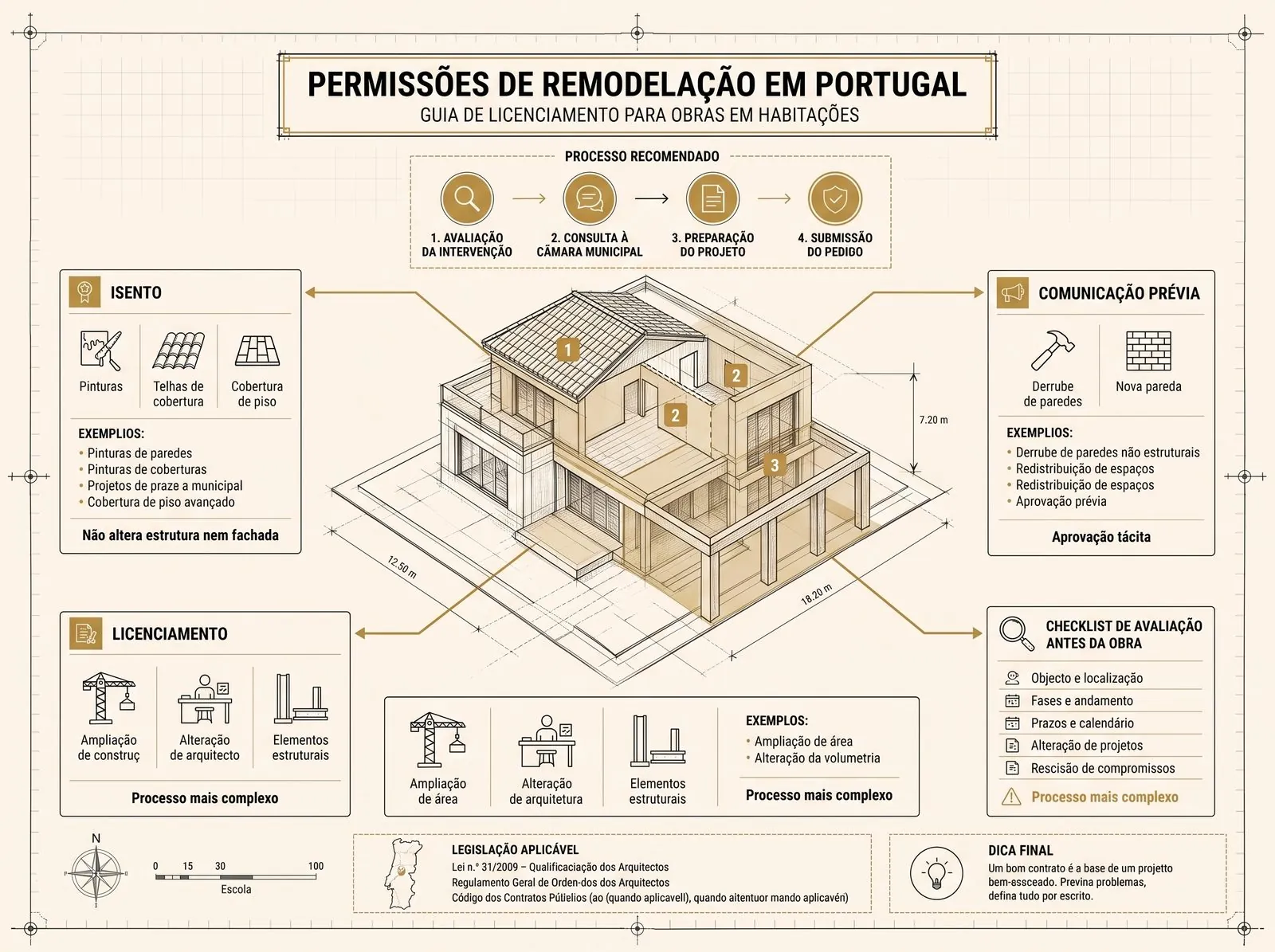
Which works are exempt from a licence or prior notification, what the Simplex reform changed and what changed from 1 October 2026, and why exemption does not mean absence of rules.
Read more — Works exempt from prior planning control: what the Simplex reform changed, and what changed in October 2026 →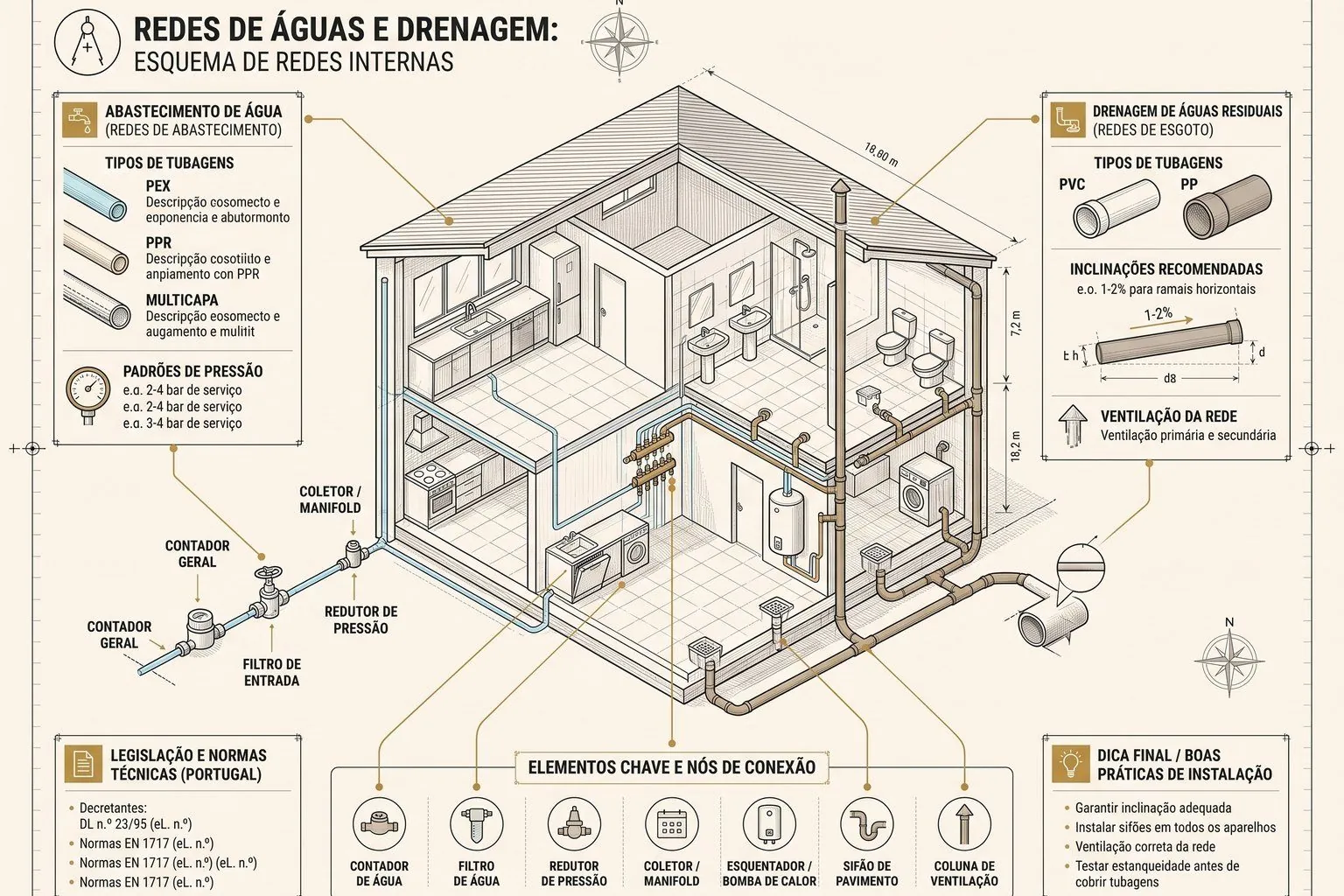
Legal framework, technical requirements and best practice for water supply and drainage networks in Portugal, and the legislative changes on the horizon.
Read more — Water supply and drainage networks in Portugal: legislation and design →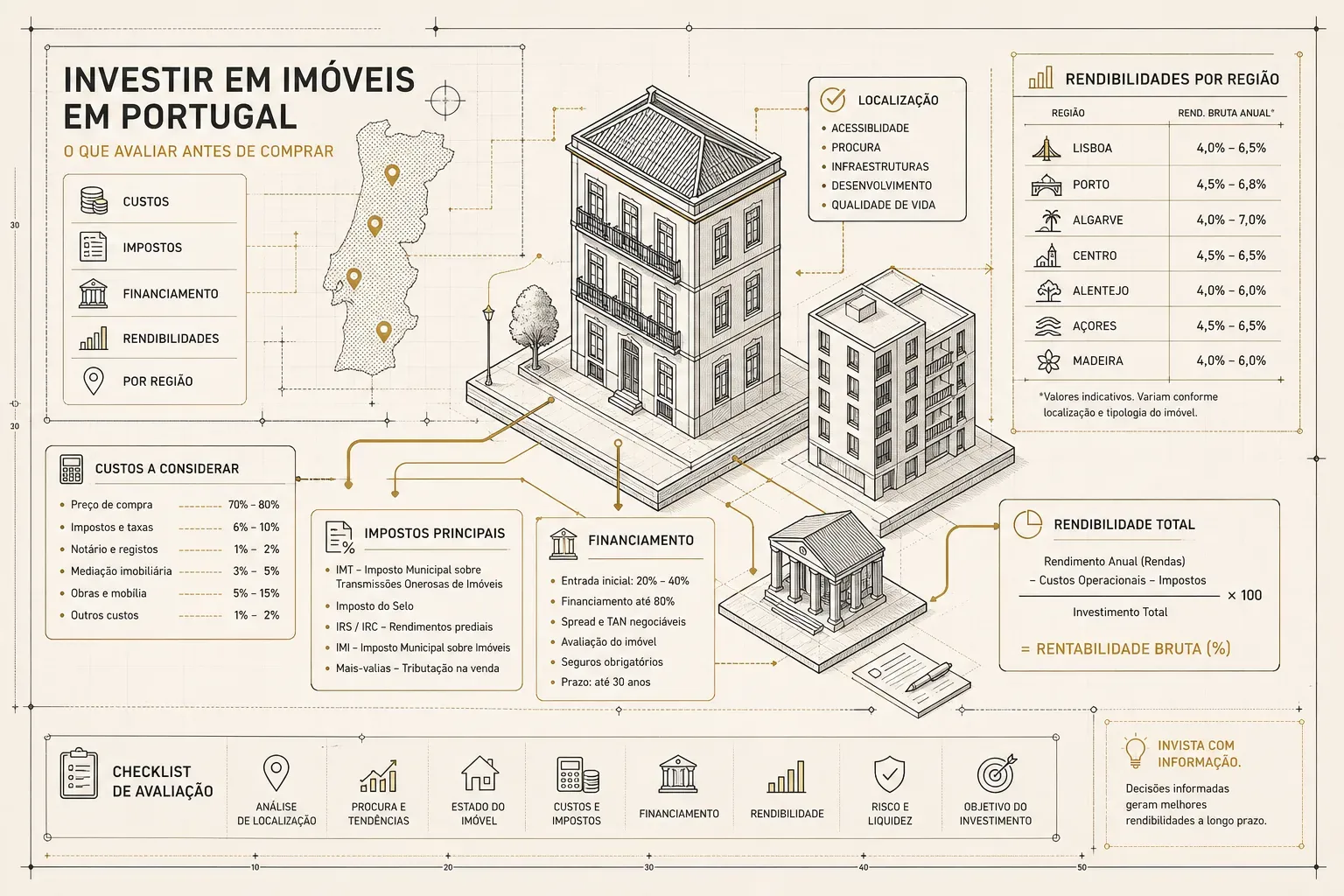
Lisbon, Porto, the Algarve and the Alentejo coast attract foreign buyers seeking asset diversification, rental income or simply a second home in Europe.
Read more — Buying property in Portugal: a guide for foreign investors →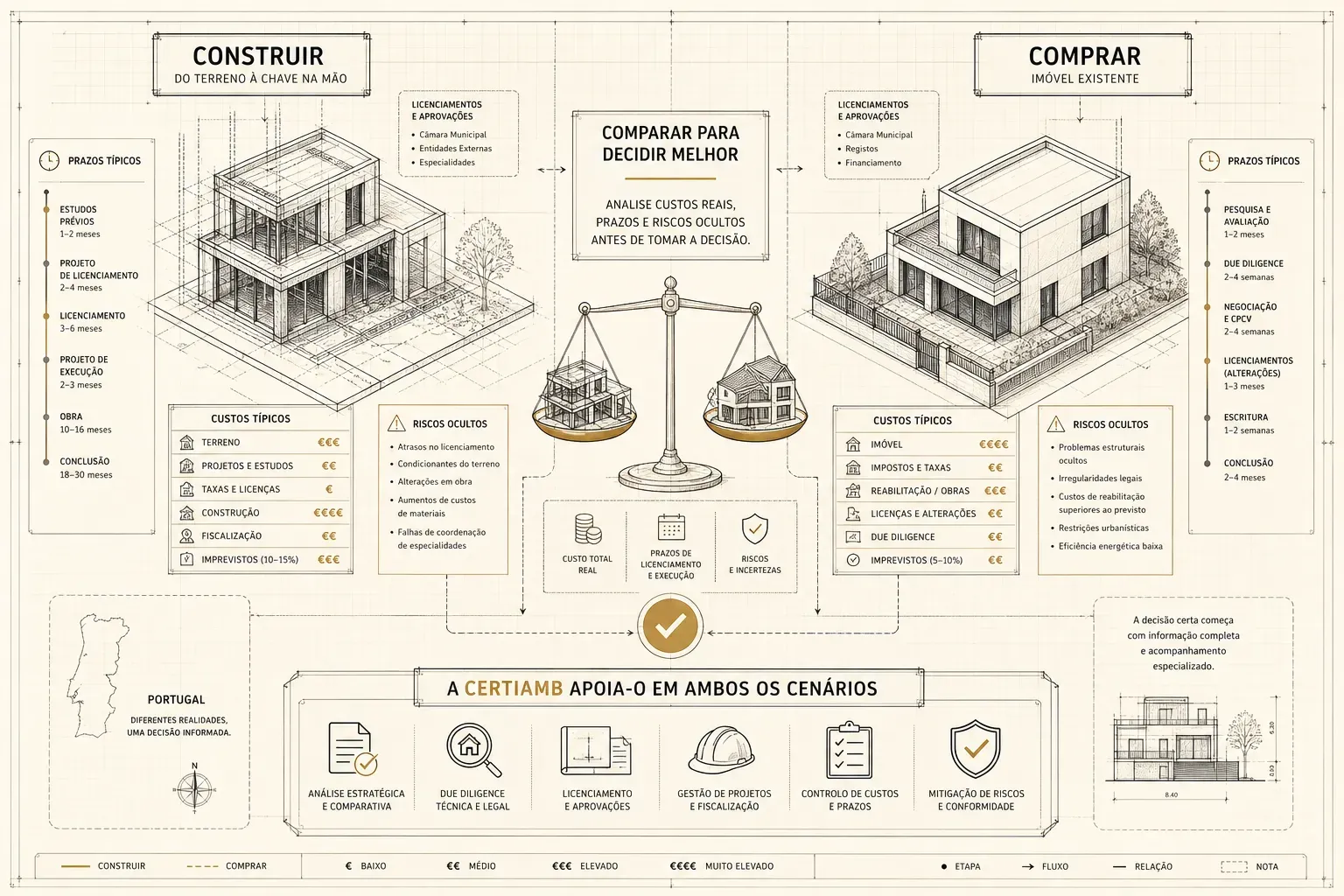
We compare real costs, taxes, permitting timelines and hidden risks to see whether building or buying makes more sense.
Read more — Build or buy a house in Portugal: which pays off more? →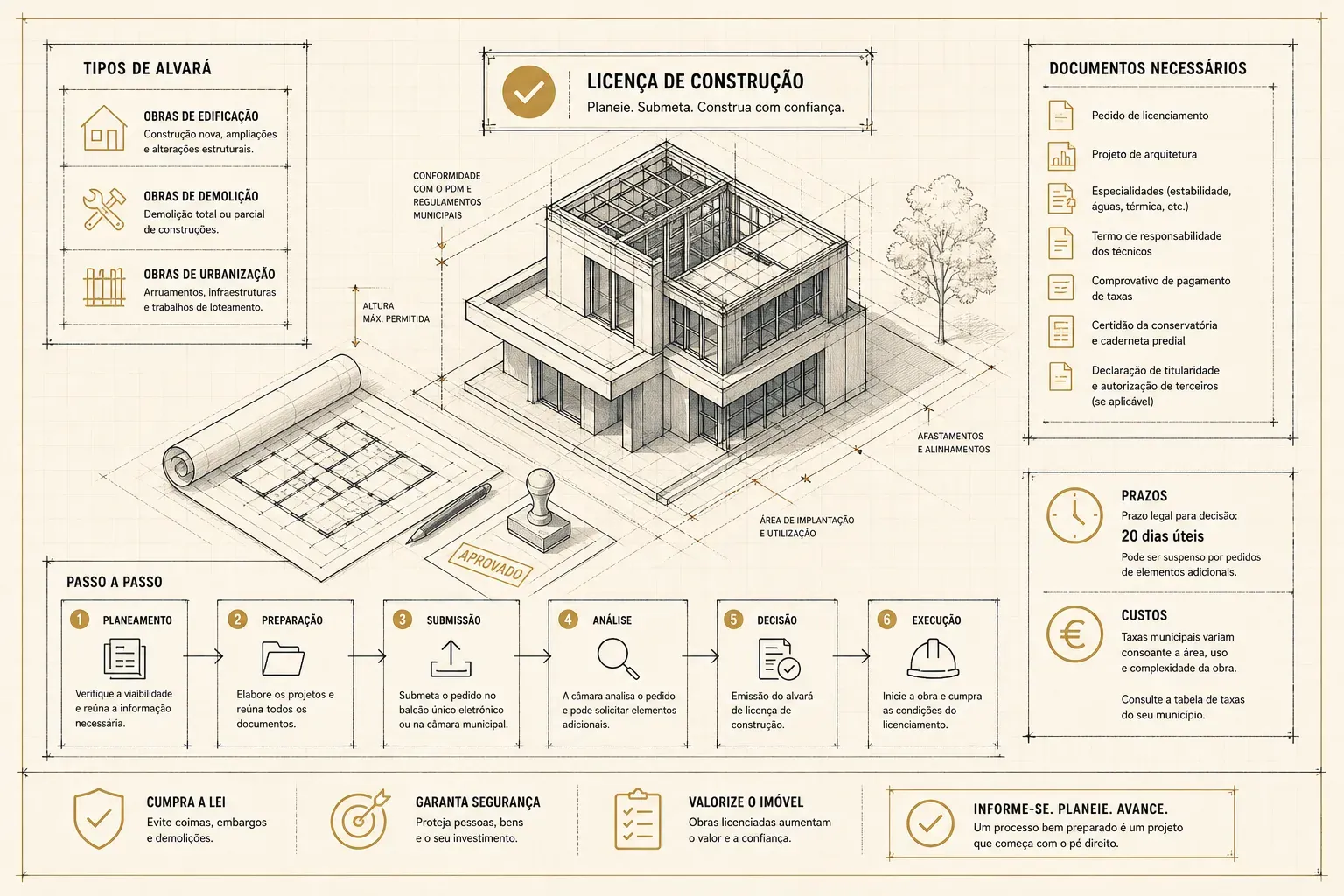
What does it take to obtain a building permit in Portugal? Which documents to prepare, which authority to approach and how long it takes.
Read more — How construction permitting works in Portugal →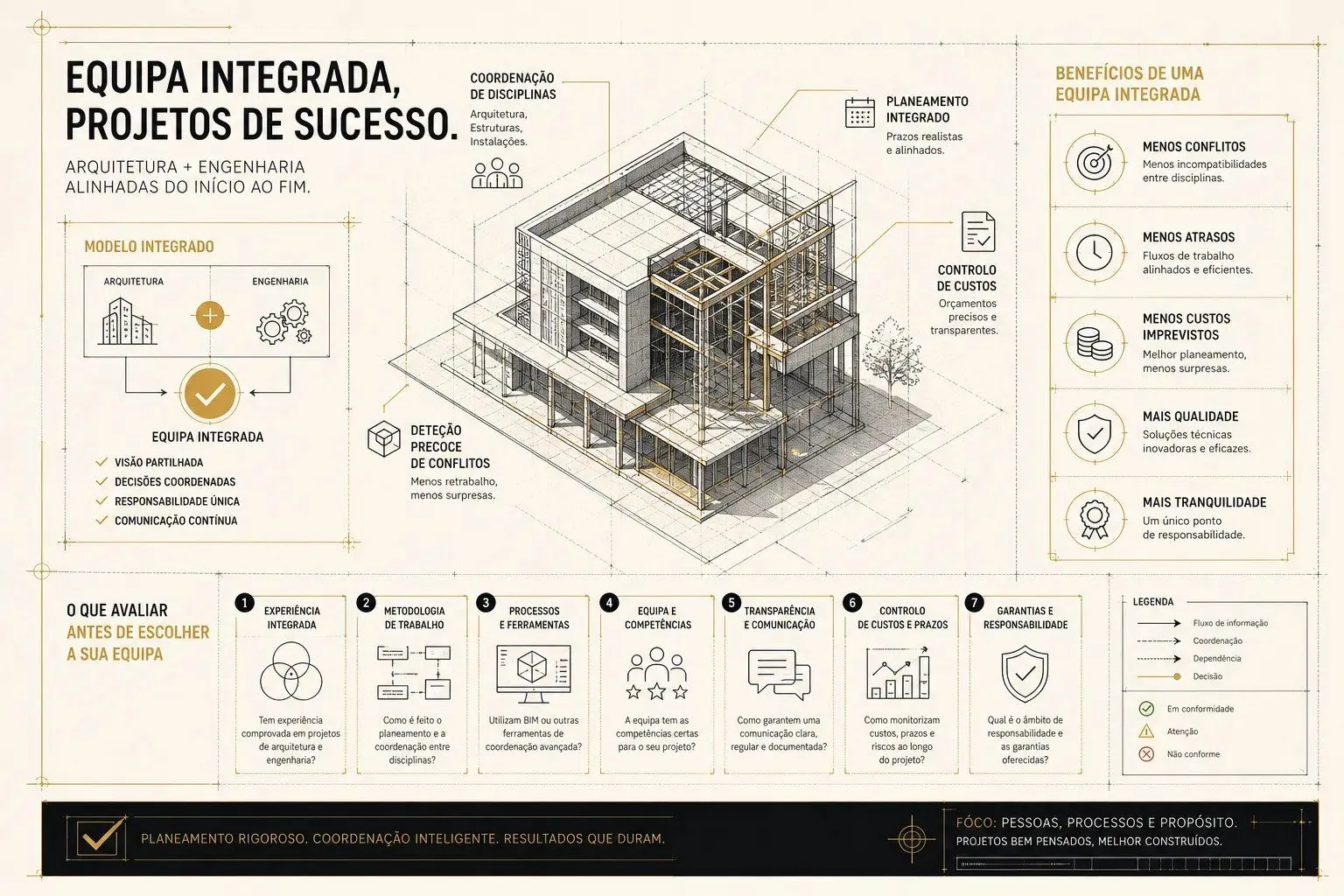
Three firms, three versions of the same project. What changes when architecture and engineering work as one team, for conflicts, costs and responsibility.
Read more — Integrated architecture and engineering firm: what changes on your project →No articles in this category.