News
Reduced VAT in an ARU: Lei n.º 48/2026 removes the ORU requirement from the earlier wording

Lei n.º 48/2026 was published on 17 August. It gives an authentic interpretation of item 2.23 of List I annexed to the Código do IVA (the Portuguese VAT Code), in the wording given to it by Lei n.º 64-A/2008, of 31 December.
Article 2 sets out the essential point. For the purposes of applying the reduced VAT rate provided for in the wording of item 2.23 interpreted by Lei n.º 48/2026, urban rehabilitation works contracts are all those carried out on buildings or public spaces located in urban rehabilitation areas (ARU) delimited under the law, regardless of whether an urban rehabilitation operation (ORU) has been approved.
Why this matters now
Since 7 October 2023, the current wording of item 2.23 no longer makes the reduced rate depend on an approved ORU. But Lei n.º 56/2023 kept the earlier wording in force for certain files: permit applications, prior notifications and prior information requests filed with the municipal council before that date, as well as permit applications and prior notifications filed later under a favourable prior information decision still in force.
It was precisely on that earlier wording that the Supremo Tribunal Administrativo (the Supreme Administrative Court), in case law harmonisation ruling n.º 3/2026, held that a previously approved ORU was necessary.
Lei n.º 48/2026 now settles the opposite solution by authentic interpretation. For this purpose it is enough that the works are carried out on a building or public space located in a lawfully delimited ARU, regardless of whether an ORU has been approved.
Retroactive effect
Article 3 provides that the law takes effect from the entry into force of Lei n.º 64-A/2008. Article 4 sets the entry into force on the day after publication, that is, on 18 August 2026.
What the law does not change
What this law does not change is the current wording of item 2.23. Since October 2023, as to buildings, the item expressly refers to rehabilitation works and does not, as a general matter, include new construction there. Works for the construction or rehabilitation of public collective use facilities remain expressly covered.
Nor does it mean that any service carried out on a building located in an ARU automatically qualifies for the reduced rate. It is necessary to check whether the operation is a works contract covered by the item, and to analyse the remaining tax and planning conditions of the specific case. Standalone design, consultancy, professional fees or site supervision services are not covered by item 2.23 merely because the building is located in an ARU.
Who should review their position
For anyone with works covered by the earlier wording of item 2.23, or with a tax assessment or tax proceeding under discussion on the ground that no ORU exists, Lei n.º 48/2026 introduces a new and relevant legal element for reassessing the position.
The first step is to confirm the lawful delimitation of the ARU, identify which wording of the item applies to the file, and check how the works contract was structured.
Do you have works in an ARU, or an old file still unresolved? Talk to us: geral@certiamb.com · +351 910 441 470.
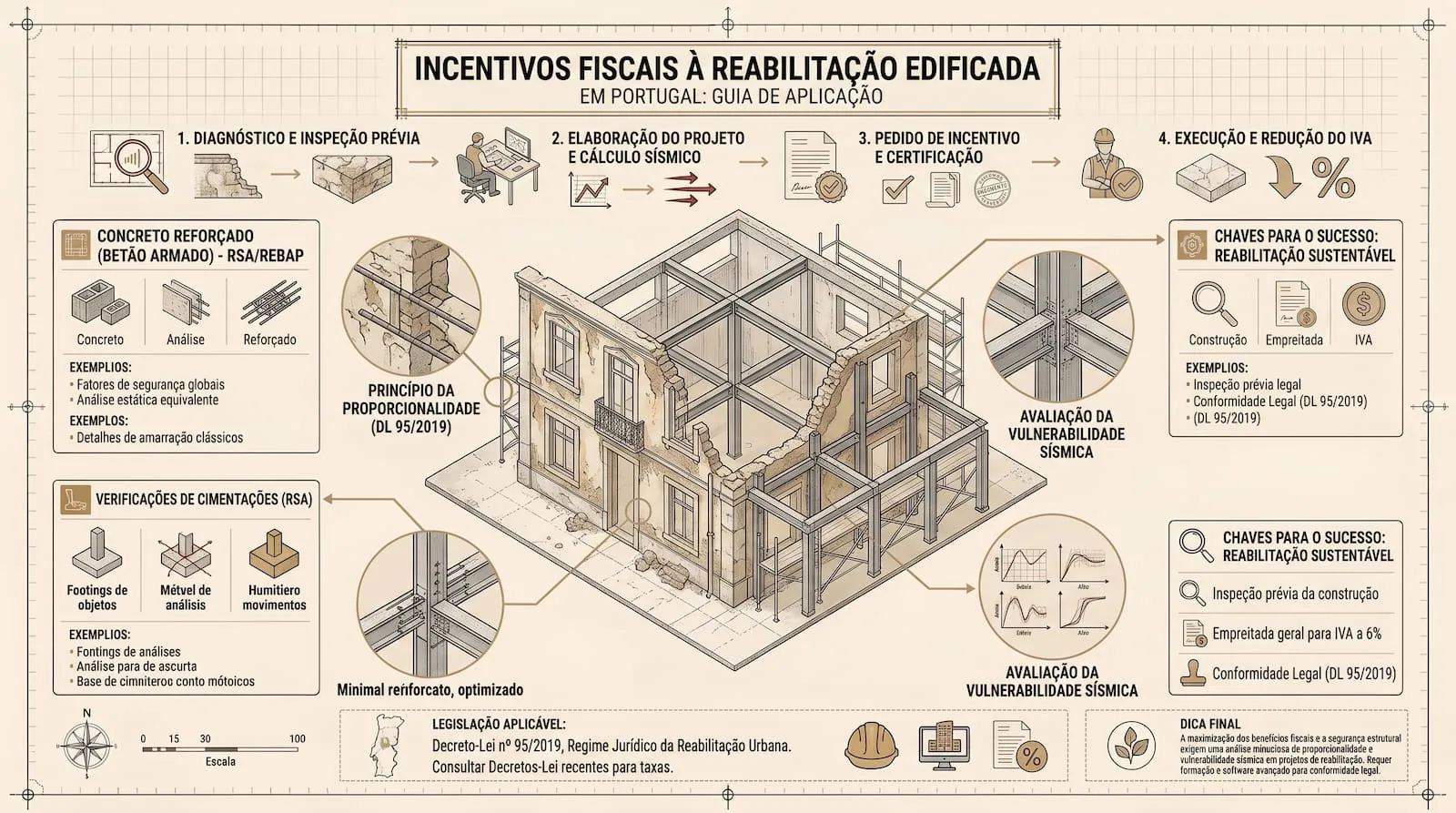
More on ARUs, tax incentives and the Decreto-Lei n.º 95/2019 regime in our article on urban rehabilitation.
View Lei n.º 48/2026 in Diário da República →